
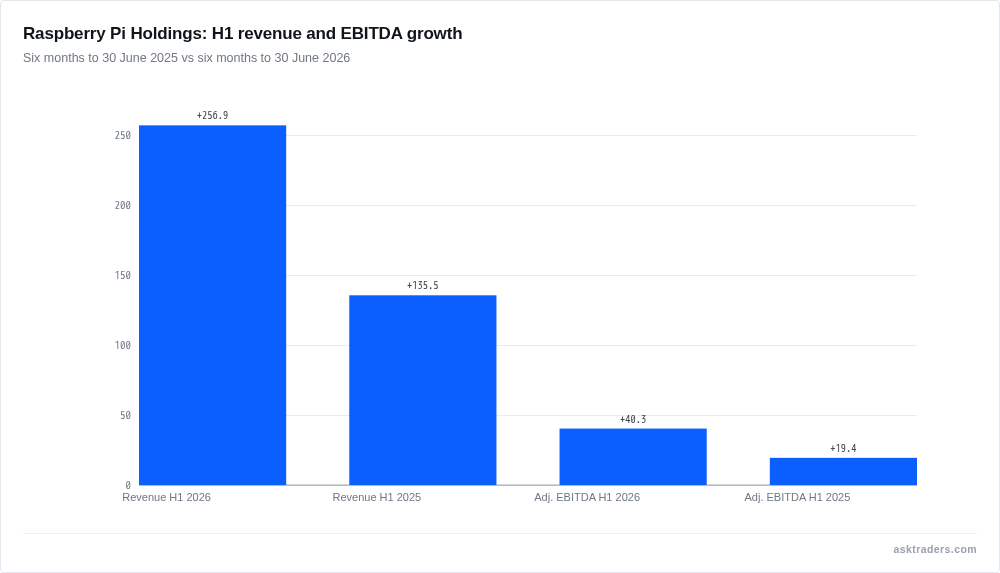
Raspberry Pi Holdings (LON: RPI), the Cambridge-based designer of low-cost single-board computers and compute modules, reported profit before tax up 216% to $19.6m in the six months to 30 June, as revenue jumped 90% to $256.9m and Adjusted EBITDA rose 108% to $40.3m. Interim results were published this morning.
Raspberry Pi shares have surged more than 17% in early Thursday trading to 739.5p.
The gains stem from a decision taken in 2025: Raspberry Pi built up strategic memory inventory before DRAM prices spiked, then sold boards through the first half of this year at 2026’s much higher market prices. Chief executive Eben Upton said the company had delivered a record first half, crediting the earlier stockpiling with keeping products available while smaller rivals struggled to secure supply.
Raspberry Pi delivered a record first half, with revenue up 90% and Adjusted EBITDA up 108%. The decision in FY 2025 to build significant strategic memory inventory has allowed us to maintain product availability at a time when smaller competitors have struggled to secure allocation.
Eben Upton, CEO, Raspberry Pi Holdings
That benefit is now fading. Management said the low-cost inventory advantage has “largely been consumed,” and gross margin, the share of revenue kept after production costs, already fell 2 percentage points to 23% as costs catch up with selling prices. The average cost of memory held on the balance sheet rose nearly fourfold, from $3.6 per gigabyte at the end of December to $13.3 per gigabyte by the end of June, even as gross profit still rose 79% to $59.4m and profit per board climbed 53% to $12.2.
Despite that moderation, Raspberry Pi says full-year Adjusted EBITDA is still expected to come in ahead of market consensus. The order backlog doubled during the half to 2.6 million units, and the group is stockpiling memory again, holding 8.3 million gigabytes at the end of August against 5.8 million gigabytes at the end of June, to protect supply into next year.
That renewed build-up is being funded partly through debt: a committed credit facility was increased from $80m to $140m in July, with $10m drawn as of June. The bigger backlog and rising inventory commitments mean H2 economics will depend on whether Raspberry Pi can pass higher memory costs on to customers without losing the volume growth that has driven this year’s numbers.