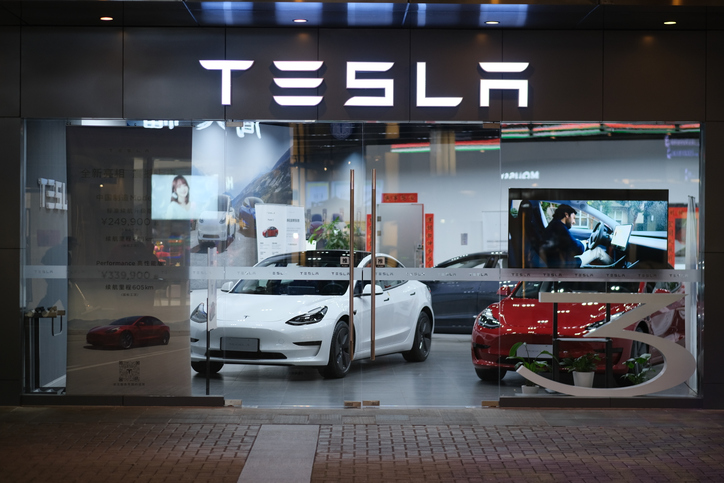

Tesla Inc. (NASDAQ: TSLA) is under pressure as its U.S. electric vehicle (EV) market share has plummeted to levels not seen since 2017, signaling intensified competition within the sector. This decline arrives amidst strategic shifts within the company and increasing scrutiny of CEO Elon Musk’s leadership and compensation.
The stock is currently facing headwinds, reflecting investor concerns about Tesla’s ability to maintain its dominance as other automakers aggressively enter the electric vehicle arena. Year-to-date, the stock has declined -8.67%, indicating a struggle to keep pace with broader market gains.
Market Share Erosion and Competitive Landscape
In August 2025, Tesla’s U.S. EV market share contracted to 38%, a significant drop from its previously held position of over 80%. This erosion is primarily attributed to the emergence of rival EV models from manufacturers like Hyundai, Honda, Kia, Toyota, and Volkswagen. These competitors are not only introducing new models but also offering substantial incentives, thereby luring consumers away from Tesla’s aging lineup. Although Tesla’s sales have experienced modest growth, they haven’t kept pace with the overall market expansion, leading to a diminished market share. The company’s strategic pivot towards projects like robotaxis and humanoid robots, while innovative, has resulted in a perceived neglect of new, affordable EV models.
Musk’s Compensation and Governance Concerns
Adding to the complexity, Tesla’s board has proposed a monumental $1 trillion compensation package for CEO Elon Musk. This package is contingent upon achieving ambitious performance targets, including an $8.6 trillion market capitalization and the successful scaling of its robotaxi and humanoid robot initiatives. While this move underscores Tesla’s reliance on Musk’s leadership amidst a competitive landscape, it has ignited debates regarding corporate governance and potential shareholder value dilution. Markets are carefully watching how this proposal will play out, given its potential impact on investor sentiment and the company’s strategic direction.
Furthermore, Elon Musk’s political activities have impacted Tesla’s brand perception. His involvement in various political matters has alienated segments of Tesla’s consumer base, particularly in Europe, contributing to a decline in sales. This highlights the intricate relationship between corporate leadership actions and consumer sentiment in the EV market.
Analyst Outlook and Future Projections
Analysts foresee a continued decline in Tesla’s U.S. EV market share as more affordable and diverse EV options become available. Projections indicate that Tesla’s market share could fall to 18% by 2026, a steep drop from the 62% it held in 2022. This anticipated decline reflects the growing competition and the increasing availability of EV models from various automakers. Markets are adjusting to this new reality, reassessing Tesla’s valuation in light of these challenges.
Price Targets
Analyst Summary: Bull and Bear Cases
Bull Case:
- Strategic pivot towards potentially high-growth areas like robotaxis and humanoid robots.
- Ambitious performance targets tied to CEO compensation could drive significant long-term value if achieved.
- Continued innovation under the visionary leadership of Elon Musk.
Bear Case:
- U.S. EV market share has plummeted to 38% amid intensified competition.
- An aging product lineup is losing ground to newer, more diverse, and incentivized models from rivals.
- Analysts project market share could decline further to 18% by 2026.
- Corporate governance concerns and potential shareholder dilution from the CEO’s proposed compensation package.
- CEO’s political activities are negatively impacting brand perception and sales.
Tesla’s current market share decline is a confluence of factors, including increased competition, strategic shifts towards advanced technologies, and the reverberations of CEO Elon Musk’s political activities. While the company continues to innovate, its ability to maintain a dominant position in the rapidly evolving EV market will hinge on its responsiveness to consumer demands, competitive pricing strategies, and the successful execution of its ambitious technological initiatives. This confluence of factors is likely to impact investor sentiment and future price action.
Searching for the Perfect Broker?
Supplement your charting with a free trading platform that rivals the best out there – multiple charts on one screen for easy monitoring, ProRealTime provides the perfect support for your investing or trading journey.
Discover our top-recommended brokers for trading stocks, forex, cryptos, and beyond. Dive in and test their capabilities with complimentary demo accounts today!
- IG Top-tier regulation – Read our Review
- eToro Wide range of instruments available to trade – Read our Review
YOUR CAPITAL IS AT RISK. 76% OF RETAIL CFD ACCOUNTS LOSE MONEY