

When comparing NVIDIA’s stock (NVDA) against Advanced Micro Devices (AMD), the scale difference becomes immediately apparent.
NVIDIA commands a staggering market capitalization of $4.53 trillion, dwarfing AMD’s $377.4 billion valuation by more than twelve times. This massive disparity reflects investor confidence in NVIDIA’s position within the artificial intelligence and data center markets, although recent moves in the respective stocks has been of the contrary.
Whilst AMD’s stock price has added 89.6% over the past 12 months, Nvidia’s stock has ‘only’ gained 26.44%. So is the valuation gap closing?
The semiconductor sector has experienced unprecedented growth, with NVIDIA emerging as the clear leader. However, understanding whether this dominance translates to investment value requires deeper analysis of financial metrics and growth trajectories.
Valuation Metrics: Price-to-Earnings Analysis
Current P/E Ratios
NVIDIA trades at a current price-to-earnings ratio of 46.1, significantly lower than AMD’s 122.0 P/E ratio. This suggests that despite NVIDIA’s higher absolute valuation, investors are paying less per dollar of current earnings compared to AMD shareholders.
Forward-Looking Valuations
The forward P/E ratios provide insight into expected earnings growth:
- NVIDIA: 24.3 forward P/E
- AMD: 36.6 forward P/E
NVIDIA’s lower forward P/E indicates stronger expected earnings growth, with analysts projecting the company will nearly double its earnings per share in the coming year.
Profitability Comparison: Margin Excellence
Profit Margin Leadership
NVIDIA demonstrates exceptional profitability with a 53.0% profit margin, substantially outperforming AMD’s 10.3% margin. This five-fold difference highlights NVIDIA’s pricing power and operational efficiency, particularly in high-margin AI and data center products.
Industry Context
Comparing both companies to broader semiconductor peers reveals NVIDIA’s exceptional position:
- Taiwan Semiconductor (TSM): 45.1% profit margin
- Qualcomm (QCOM): 12.5% profit margin
- Intel (INTC): 0.4% profit margin
NVIDIA’s margin leadership stems from its dominant position in AI accelerators and data center GPUs, commanding premium pricing due to limited competition in these high-growth segments.
Recent Financial Performance: NVIDIA’s Momentum
Latest Quarter Results
NVIDIA’s most recent quarter (ending October 31, 2025) showcased remarkable financial performance:
- Revenue: $57.01 billion
- Gross Profit: $41.85 billion
- Operating Income: $36.01 billion
- EBITDA: $38.75 billion
Quarter-over-Quarter Growth
The company’s growth trajectory remains impressive:
- Revenue growth: +22.0%
- Gross profit growth: +23.6%
- Operating income growth: +26.6%
This consistent acceleration demonstrates NVIDIA’s ability to scale operations while maintaining profitability during rapid expansion.
Investment Efficiency: Research and Development
NVIDIA invested $4.71 billion in research and development during the latest quarter, representing approximately 8.3% of revenue. This substantial R&D investment ensures continued innovation in AI, gaming, and automotive technologies, maintaining competitive advantages against AMD and other rivals.
The company’s selling, general, and administrative expenses totaled just $1.13 billion, demonstrating operational discipline while scaling revenue dramatically.
Competitive Positioning: Market Share Dynamics
AI and Data Center Markets
NVIDIA maintains dominant market share in AI training and inference workloads, with limited direct competition from AMD in high-performance computing applications. This positioning explains the significant valuation premium and superior profit margins.
Gaming and Consumer Markets
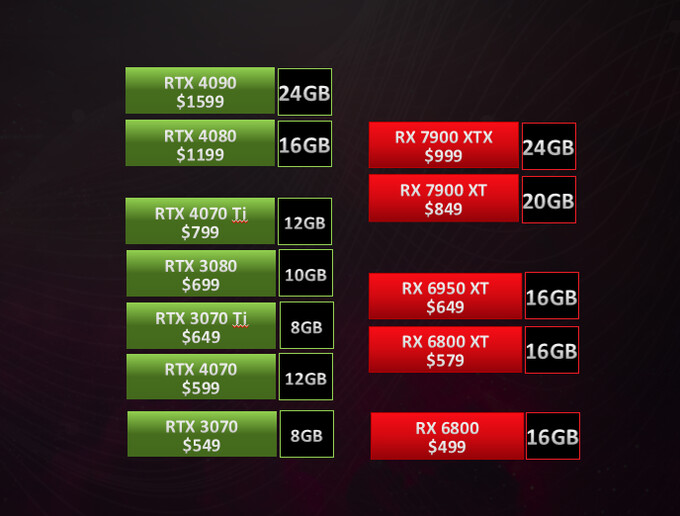
AMD competes more directly with NVIDIA in gaming graphics cards and consumer processors, creating pricing pressure in these segments. However, NVIDIA’s diversification into AI has reduced dependence on traditional gaming revenue.
Investment Considerations: Risk and Opportunity
NVIDIA Advantages
- Market leadership in AI acceleration
- Superior profit margins and cash generation
- Strong forward earnings growth expectations
- Diversified revenue streams across multiple high-growth markets
AMD Opportunities
- Lower absolute valuation provides potential upside
- Strong competition in CPU markets against Intel
- Growing data center and enterprise presence
- More accessible entry point for investors
Valuation Perspective
The NVIDIA vs AMD comparison reveals two companies at different stages of market evolution. NVIDIA’s premium valuation reflects its dominant position in AI and data center markets, supported by exceptional profitability and growth metrics. AMD offers a more traditional semiconductor investment profile with lower margins but potentially greater upside from current levels.
Investors must weigh NVIDIA’s proven execution and market leadership against its substantial valuation, while considering AMD’s competitive positioning and growth potential in an expanding semiconductor market. For those looking to trade these stocks effectively, understanding these fundamental differences is crucial. Additionally, investors should consider diversifying their portfolio across different semiconductor companies to manage risk. When evaluating these opportunities, it’s important to understand trading vs investing approaches to determine the best strategy for your financial goals.
Searching for the Perfect Broker?
Supplement your charting with a free trading platform that rivals the best out there – multiple charts on one screen for easy monitoring, ProRealTime provides the perfect support for your investing or trading journey.
Discover our top-recommended brokers for trading stocks, forex, cryptos, and beyond. Dive in and test their capabilities with complimentary demo accounts today!
- IG Top-tier regulation – Read our Review
- eToro Wide range of instruments available to trade – Read our Review
YOUR CAPITAL IS AT RISK. 76% OF RETAIL CFD ACCOUNTS LOSE MONEY