

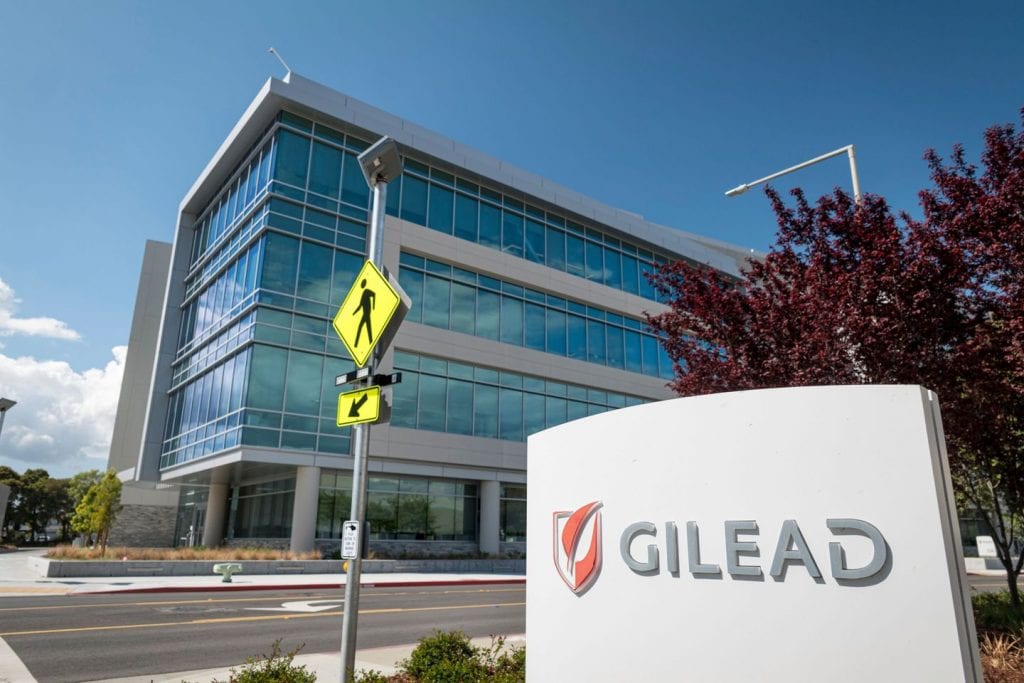
Gilead Sciences (NASDAQ: GILD), the US biopharmaceutical group behind the blockbuster HIV drug Biktarvy, has won US Food and Drug Administration approval for Bixlenvo, a new once-daily single-tablet HIV regimen. The approval was announced after Thursday’s market close, so any share reaction has yet to be tested.
Gilead shares closed Thursday’s session at $148.86, up 0.52% from the previous close of $148.09, and sit within a 52-week range of $106.44 to $155.38. The stock has climbed sharply since early August, meaning Friday’s open will be the first chance for the market to react to the approval.
Bixlenvo combines bictegravir, the drug behind Biktarvy, with lenacapavir, Gilead’s first-in-class capsid inhibitor (a drug that blocks the HIV virus’s protein shell). It is the smallest available once-daily single-tablet regimen for virologically suppressed HIV-1 adults, meaning the virus is kept undetectable in the blood by treatment, and the only such option for suppressed patients on complex regimens unable to take existing single-tablet therapies. Patients take a two-day starter dose with Gilead’s Sunlenca before switching to Bixlenvo alone.
The approval rests on Phase 3 ARTISTRY-1 and ARTISTRY-2 trial data, which included patients switching from Biktarvy itself, and showed comparable efficacy maintaining viral suppression at week 48 with no new safety signals. Biktarvy generated $3.8bn in revenue in the second quarter, up 7% year on year, while Gilead’s total HIV product sales reached $5.7bn, up 12%, underlining how central the franchise is to the group as it looks to extend its lead ahead of eventual patent-driven generic competition.
Daniel O’Day, Gilead’s chairman and chief executive, said: “Bixlenvo continues Gilead’s long-term commitment to innovation in HIV. Bringing together bictegravir with our first-in-class capsid inhibitor, lenacapavir, Bixlenvo offers a novel choice to people with HIV looking to switch or simplify their treatment regimen.”
The combination is not approved by any regulatory authority outside the United States, leaving Bixlenvo’s rollout confined to the US market for now.


