




Finding trustworthy and high-quality NASDAQ brokers and trading platforms is essential for trading and investing in stocks listed on the market effectively. From accessing the NAS100 index to integrating with MetaTrader 5 (MT5) and utilising user-friendly trading platforms, traders need to prioritise trust, quality, and specific offerings tailored to NASDAQ trading.
This guide aims to help traders understand some of the key differences between NAS100, and the NASDAQ Composite (IXIC), and also shed some light on some of the more important factors to consider when trading either of the US indices. This should help support informed investment decisions and give a refresher on the topic. For those that are ready to get trading, identifying the best brokers for NASDAQ, and uncovering trading platforms that align with their trading needs is going to be the dish of the day. Here, we delve into the top NAS100 brokers, also shedding light on the essential factors to consider when choosing a brokerage firm.
#1eToro
 What We Liked:
- eToro offers a broad range of assets to trade, including the Nasdaq-100
- The platform is known for its innovative CopyTrader feature, enabling clients to replicate the actions of top traders in real-time
- eToro is regulated by top-tier authorities, providing a high level of security to its clients
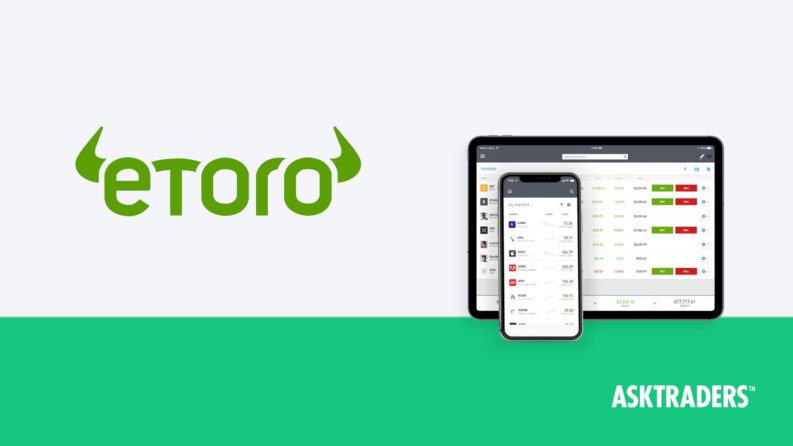
eToro stands out as a well-established broker with a global community of millions of users. The platform’s unique mix of assets includes cryptocurrencies, stocks, options, ETFs, and stock indexes. It is regulated by financial authorities in Cyprus, the UK, and Australia, ensuring a high level of transparency and trustworthiness.
eToro provides traders with a user-friendly platform and a diverse range of social trading options. While eToro is primarily a CFD and forex broker, it also offers the trading of real stocks, ETFs, and many cryptocurrencies. Furthermore, the broker offers insightful webinars and podcasts, enhancing the trading experience for its clients.
#2Tickmill
What We Liked:
- No withdrawal or inactivity fees
- Excellent trading experience
- There is a broad range of assets to trade, including the Nasdaq-100
- Broker with Nas100 and ZAR account
- Tickmill is regulated in the UK, South Africa, Cyprus, the UAE, and the Seychelles
Tickmill provides traders with a top-notch trading experience. Founded by a group of respected industry professionals, this broker takes pride in being built by traders, for traders. As a result, it consistently ranks as one of the most cost-effective brokers. Its competitive pricing policy extends across a wide range of assets it allows you to trade.
Tickmill also provides clients with solid research materials, including its Signal Centre and Autochartist. These tools analyse market events and work to highlight trading opportunities. Given that Tickmill is regulated by various regulatory bodies, traders in various regions can open an account on the platform, with clients benefitting from an insolvency-based insurance policy. As one of the better-regulated brokers on the market in a general sense, Tickmill is one of few brokers with NAS100 and ZAR accounts (by virtue of the FSCA regulation).
#3Admirals
What We Liked:
- Admirals is regulated by top-tier authorities, instilling a high level of security and trust
- Admirals offers advanced trading tools that enhance the overall trading experience
- The broker provides a competitive fee structure, making it an accessible platform for traders
- MT5 broker with Nasdaq
Admirals, a well-regulated online trading platform, offers a wide range of trading instruments, including Forex, CFDs on stocks, commodities, indices, bonds, ETFs, and cryptocurrencies. The broker’s commitment to security and regulation is evident through its multiple regulatory licenses across various international jurisdictions, including the UK, South Africa, Cyprus, Australia, and Estonia.
Admirals provides various trading tools and market research resources, including analytics, fundamental analysis, and a market heat map. Additionally, it offers volatility protection to help limit potential losses caused by market volatility.
#4IG
What We Liked:
- A well-respected broker listed on the London Stock Exchange
- One of the best Nasdaq trading platforms on market
- An extensive asset portfolio that includes the Nasdaq-100
IG, founded in 1974, is a publicly traded and well-regulated broker operating in various international jurisdictions. It offers a comprehensive range of trading platforms, tools, and research materials, making it a top choice for traders. It has the capital and size to do many things, from offering one of the largest asset portfolios of 17,000+ markets and a variety of trading platforms to suit the tastes of its 239,000+ registered customers. And of course, its assets include the Nasdaq-100.
IG Group is regulated by multiple top-tier authorities, holding a staggering 11 regulatory licenses across various international jurisdictions. This dedication to regulatory compliance makes IG Group one of the most regulated brokers in the world, instilling a high level of trust and security for its clients.
#5AvaTrade
What We Liked:
- AvaTrade is regulated by top-tier authorities, instilling a high level of security and trust
- The unique AvaProtect tool offers enhanced risk management capabilities
- AvaTrade offers a wide range of platforms, including their proprietary AvaTradeGO platform and MetaTrader 4 & 5
- The broker allows clients to trade the Nasdaq-100 in micro, while it also has over 840 CFDs and options for speculation and hedging
AvaTrade, founded in 2006 and headquartered in Ireland, is a multi-licensed forex and CFD broker offering more than 840 CFDs and vanilla options. It stands out with its diverse platform offering, low trading fees, extensive trading tools, and comprehensive educational content. The broker is regulated in multiple jurisdictions, including by top-tier authorities such as CBI, ASIC, and JFSA.
AvaTrade caters to both first-time traders and seasoned experts. It is well-suited for longer-term day and position traders due to its low swaps and enhanced risk management capabilities. Furthermore, AvaTrade offers multifaceted research materials with a strong emphasis on technical analysis. It incorporates content from TradingCentral, providing access to trading signals and a news screener section for detailed breakdowns of market developments. Additionally, the broker offers an economic calendar to keep traders informed about upcoming events.
Factors to Consider When Choosing a NASDAQ Broker
Regulation – First and foremost, any broker you choose needs to be regulated in your country. If you are in the UK, they will need to be regulated by the Financial Conduct Authority (FCA). However, if you are in South Africa, the Financial Sector Conduct Authority (FSCA) is responsible for market conduct regulation and supervision
Trading Fees and Commissions – Regardless of the asset you are trading or investing in, it is important you first know about the potential fees and commissions you will incur. Aim for a broker that charges minimal fees to ensure they don’t eat into your potential profits.
Trading Tools and Platforms – Of course, it its vital that the broker you choose allows you to invest in and trade the Nasdaq-100.Beyond that, try to pick a broker with a user-friendly platform that has the tools you require.
Customer Service and Support – Customer service is always a key aspect to consider when choosing a broker. There may be times when you need help quickly, so being able to contact the support team is vital.
Research and Analysis – Many brokers offer research and analysis. While this may not be important for everyone, it can be a great addition and help provide a further degree of research into your investment/trading processes.
Why is the NASDAQ important?
The Nasdaq holds significant importance in the financial markets for several reasons. It is heavily weighted towards technology and internet-related stocks, making it a crucial barometer for the performance of the tech sector. Additionally, it represents innovative and fast-growing businesses, reflecting the pace of innovation and growth in the economy, with its performance considered a gauge of investor sentiment and risk appetite.
Trading on the Nasdaq stock exchange began in 1971, and it was the world’s first fully electronic stock market at the time. In that same year, the Nasdaq Composite Index was created, with the Nasdaq-100 launched in January 1985.
Since then, the Nasdaq-100 Index has become a focal point for investors seeking exposure to innovative and high-growth companies in the technology, biotechnology, and consumer services sectors. Meanwhile, the also tech-heavy Nasdaq Composite is a stock market index that tracks almost all stocks listed on the Nasdaq stock exchange. It’s one of the most important US indexes, alongside the Dow Jones Industrial Average and S&P 500.
The rise of artificial intelligence and other new technologies has resulted in more investors wanting to invest in Nasdaq-listed stocks. Still, the importance of selecting the right brokerage firm cannot be overstated.
NASDAQ-100 Index Chart
The NASDAQ-100 and NASDAQ Composite
The Nasdaq Composite, often just called “the Nasdaq,” tracks the performance of over 2,500 companies listed on the Nasdaq exchange. The index can be used to gauge the health of the tech industry, although it also has a heavy dose of consumer discretionary and healthcare companies mixed in. As the index is weighted by market capitalization, tech giants like Apple and Microsoft hold more sway than smaller players. This means the Nasdaq’s fortunes are closely tied to the ups and downs of the tech world.
The Nasdaq-100 Index comprises 100 of the largest non-financial companies listed on the Nasdaq stock exchange. It is a collection of companies, including tech giants, big retailers, industrial leaders, and healthcare innovators. As the Nasdaq-100 uses a modified capitalization-weighted system, each company’s weighting in the index is based not only on its stock price but also on a calculation that considers its market capitalization (stock price multiplied by outstanding shares).
NASDAQ Composite Index Chart
What Time Does the NASDAQ Open?
The Nasdaq Stock Exchange opens at 9:30 am Eastern Time Zone (ET) and closes at 4 pm ET Monday to Friday. The exchange doesn’t close for lunch and is open for 6 hours and 30 minutes per day. However, it also offers extended hours trading, with pre-market trading sessions from 4 am to 9:30 am ET and after-hours trading from 4 pm to 8 pm ET
Many experienced traders consider the early hours and last hours of the core trading session (from 9:30 am to 11:30 am ET and 3 pm to 4 pm ET) as more favorable times for trading due to heightened trading activity and potential price movements.
Can I trade NASDAQ-100 (in South Africa)?
Yes, South African traders have the opportunity to trade the Nasdaq-100 index through various well-regulated brokers in the region. These brokers offer the index on their platforms, although as well as regulation, it is important for traders to select a broker that offers competitive spreads, fast execution speeds, and a suite of analysis tools to support their trading activities.
Some of the brokers that cater to Nasdaq-100 trading in South Africa include IG Markets, Plus500, AvaTrade, and FXCM. These SA brokers with Nasdaq 100 offer CFDs with competitive spreads.