





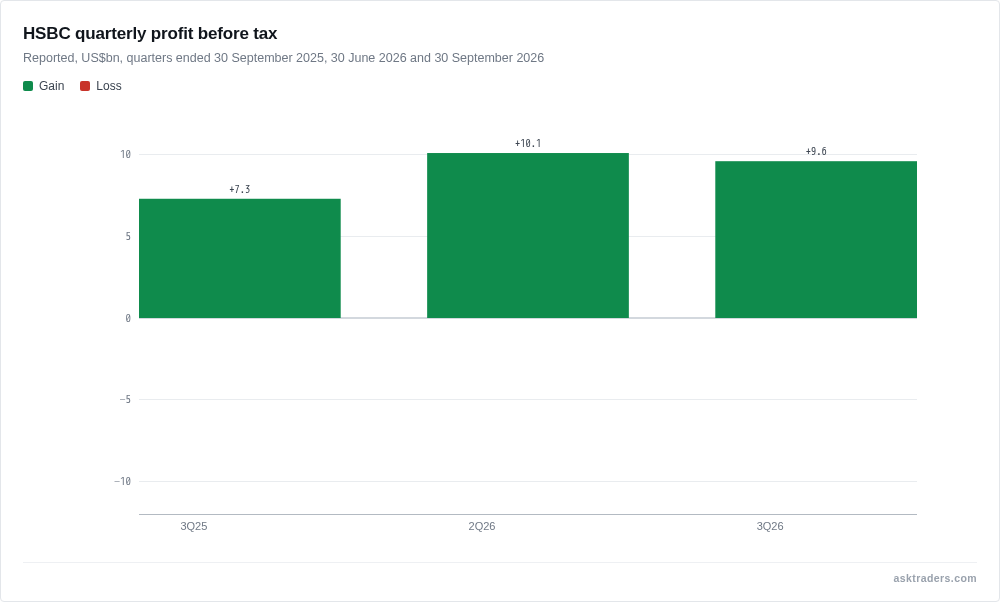
HSBC Holdings (LON: HSBA), the London-headquartered global bank, reported third-quarter profit before tax of $9.6bn today, up 32% from $7.3bn a year earlier. It also intends to start a further buyback of up to $1bn.
Much of the jump comes from a charge from a year ago. The third quarter of 2025 carried a $1.4bn legal provision for a Madoff-related claim in Luxembourg, which has not recurred. Stripping that and other notable items out, profit rose a more modest $0.9bn to $10.0bn at constant currency.
Revenue grew 5% to $18.6bn, and net interest income rose 6% to $9.3bn. Banking net interest income, what the bank earns on lending after paying for deposits, rose $0.6bn to $11.7bn. The net interest margin held at 1.57%, level with a year ago but down from 1.62% in the second quarter.
Fee income in Wholesale Transaction Banking rose 11%, while Wealth was flat at $2.7bn. Expected credit losses, the provisions for loans that may go bad, fell 17% to $0.8bn, helped by lower Hong Kong commercial property charges.
Reported costs fell 12% to $8.8bn, largely as the legal provision fell away. On the basis of HSBC’s targets, costs rose 1.4%.
Capital moved the other way. The CET1 ratio, a core measure of financial strength, fell to 13.9% from 14.1% on 30 June and is below the 14% to 14.5% target range. Higher risk-weighted assets, lower fair value on some debt holdings as yields rose, and the buyback announced at the interim results, completed on the 28th of September, all weighed. Profits net of dividends partly offset them. The third dividend is $0.10 a share, as a year ago.
Group chief executive Georges Elhedery said, in part:
As we simplify HSBC, we are creating greater capacity to invest, grow and deliver strong returns for our shareholders.
Georges Elhedery, HSBC
The February targets stand: return on tangible equity of 17% or better in 2026 to 2028 excluding notable items, and banking net interest income of at least $46bn this year. Return on tangible equity for the quarter was 17.7%, or 18.2% excluding notable items. HSBC expects Basel 3.1 rules to add about 40 to 50 basis points to CET1 at the start of 2027.