
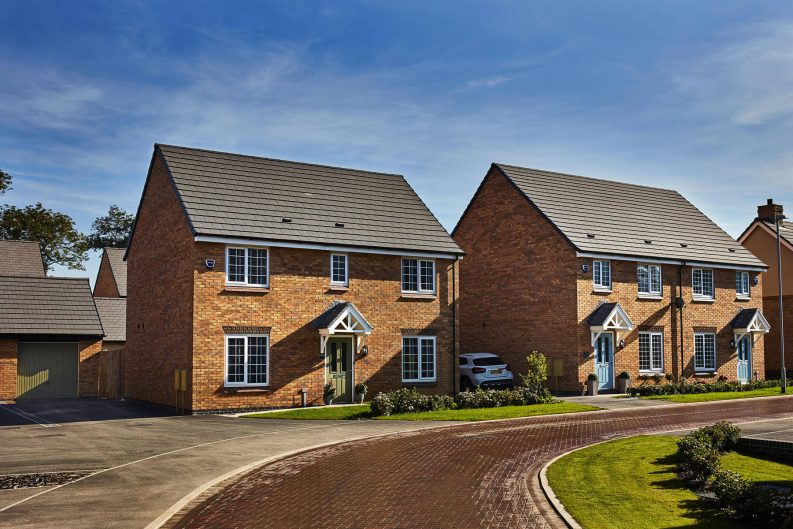
UK housebuilder shares have been among the FTSE 350’s hardest-hit sectors in 2026, pressured by mortgage rates above 5% and lingering fiscal uncertainty.
Britain’s listed housebuilders are enduring one of their most difficult stretches in years, with shares in major developers declining sharply as mortgage costs rise, fiscal policy uncertainty persists, and buyer demand softens across the market.
The housebuilding sector has fallen 26% year to date and 31% over the past 12 months, making it the worst performer among all 38 FTSE 350 industrial groups, according to the Daily Telegraph. Taylor Wimpey (TW.LSE) shares are near 82.3p, down around 31% since their peak in February, while Persimmon has slipped to around 1,083.7p, more than 25% below its level from earlier this year. Persimmon (PSN.LSE) is targeting 12,000 to 12,500 completions in 2026.
Rate Hold Dashes Recovery Hopes
The primary catalyst has been a reversal of interest rate expectations. The Bank of England held its base rate at 3.75% in June, disappointing markets that had anticipated a cut to 3.5%, as policymakers cited inflation risks linked to the Middle East conflict. The average two-year fixed mortgage rate has since risen from below 4% in early 2026 to between 5.23% and 5.61%, according to market data from April, pushing up borrowing costs for prospective buyers.
Taylor Wimpey’s 2025 results illustrated the strain. Revenue rose 13% to £3.84bn, but pre-tax profit fell 54% to £146.5m, owing to a £413m fire safety provision. Adjusted operating profit guidance for 2026 is around £400m, below the £420.6m in 2025. At its April annual general meeting, the net private sales rate slipped to 0.74 per outlet per week from 0.77, with the order book at £2.23bn, down from £2.33bn. Chief executive Jennie Daly cited “ongoing affordability challenges and an increasingly uncertain macro backdrop.”
The sector entered 2026 already under pressure. Chancellor Rachel Reeves’ Autumn 2025 Budget unsettled buyer sentiment, while changes to stamp duty thresholds added transaction costs. RSM UK’s housing market tracker for the first quarter of 2026 described conditions as held back by an “unstable fiscal environment.” Property consultancy Savills has forecast UK house prices to fall 2% over 2026, with affordability sitting at approximately 6.9 times average wages.
Analysts have revised targets downward across the sector but retain positive ratings on the stocks. Morningstar has also cut fair value estimates for all major UK homebuilders, noting that the sector is trading below one times tangible book value.
The near-term outlook depends heavily on when the Bank of England resumes cutting rates. A credible signal of further reductions could bring mortgage costs back toward 4% and offer the sector a recovery catalyst. Until then, with order books contracting, affordability stretched, and fire safety costs continuing to depress reported profits, Britain’s housebuilders face a difficult second half of 2026.


