

Teradyne’s stock (NASDAQ:TER) is a firm outperformer so far this year, up 20.33% through the first month of 2026, with earnings set to test momentum. After rallying 125% in the past 12 months, plenty is priced in to the stock, with the company reporting after today’s closing bell. So what can we expect from the print?
Wall Street is looking for an EPS of $1.36,just above the midpoint of management’s $1.20 to $1.46 guidance range.
The quarter tests whether AI-linked test demand can sustain the sequential revenue step-up management guided to in October, when the company set a $920M to $1.0B revenue range well above the then-consensus $815.7M.
$38.34B
91.7
$1.36
$968.8M

The setup differs from prior quarters because management already forced a sharp upward reset of Street models with the Q3 report. In October, Teradyne guided Q4 revenue to a $960M midpoint and EPS to $1.33, citing robust AI-related demand across compute, networking, and memory test alongside AI project pull-ins.
The stock surged roughly 20% on the news, consistent with investors repricing the forward slope rather than simply rewarding the Q3 beat. That reaction pattern matters because Teradyne’s track record shows guidance credibility drives price action more than backward-looking beats; Q4 2024 and Q1 2025 both delivered EPS above consensus yet sold off when the next-quarter outlook implied slowing or heightened uncertainty.
The valuation constraint is explicit. Teradyne trades at 91.7x trailing earnings and $251.24 per share versus a $220 consensus target, a positioning that requires Q4 results to validate the AI test thesis and Q1 2026 guidance to preserve the elevated run-rate.
Options markets price a 5.5% expected move, modestly above the 4.6% average historical post-earnings reaction but below the 7.6% and 5.1% moves that followed the last two quarters when guidance exceeded expectations.
The asymmetry is clear: a beat on management’s own guided range combined with credible forward revenue cadence would support the premium multiple, while merely meeting the midpoint or signaling Q4 lumpiness risks a sharp revaluation.
Let’s take a closer look at the details.
Consensus Estimates
| Metric | Consensus Est. | Range | Prior Guidance | YoY Change |
|---|---|---|---|---|
| EPS (Adjusted) | $1.36 | $1.02 – $1.39 | $1.20 – $1.46 (mid: $1.33) | +43.2% |
| Revenue | $968.8M | $735.0M – $1.0B | $920M – $1.0B (mid: $960M) | +28.7% |
| Gross Margin | 57.5% | 57.0% – 58.0% | 57% – 58% | +120 bps |
Analysts Covering: 16 analysts (EPS), 13 analysts (Revenue)
Estimate Revisions (30d): 2 up / 0 down
Consensus revenue of $968.8M sits 0.9% above management’s $960M midpoint, a narrow gap that reflects Street acceptance of the October guidance rather than incremental optimism. The EPS estimate of $1.36 lands 2.3% above the $1.33 guided midpoint, implying analysts expect execution slightly better than management signaled but not materially so. Estimate stability over the past 30 days, with two upward revisions and no downgrades, suggests the Street has anchored to the guided range rather than attempting to front-run a beat.
The year-over-year comparisons tell the acceleration story: revenue growth of 28.7% versus Q4 2024’s $753M and EPS growth of 43.2% versus $0.95 reflect the AI-linked test demand inflection management highlighted in October. Gross margin expectations of 57.5% align with the 57% to 58% range management provided, indicating analysts model mix improvement as SoC and memory test revenue scales. The risk lies in whether Q4 represents sustainable demand or a pull-forward driven by specific AI project timing, a distinction forward guidance will need to clarify.
Management Guidance and Commentary
“We are experiencing robust AI-related demand across our compute, networking and memory test businesses. This strength, combined with AI project pull-ins, is driving our Q4 revenue guidance to $920 million to $1 billion.”
Management’s October commentary framed Q4 as an inflection quarter driven by AI test demand rather than cyclical recovery. The $920M to $1.0B revenue range represented a 20% to 30% sequential step-up from Q3’s $769M, with the midpoint of $960M sitting 18% above the then-consensus $815.7M. CEO Mark Jagiela explicitly tied the upside to AI project pull-ins, language that raises the question of whether Q4 revenue reflects sustainable run-rate or timing-driven lumpiness. The EPS guidance of $1.20 to $1.46 implied gross margins in the 57% to 58% range, consistent with favorable mix as higher-margin SoC and memory test revenue scales relative to lower-margin robotics.
The gap between management’s guided midpoint and the original Street baseline was unusually wide, forcing analysts to either raise models or accept a high-probability beat. By the time of the Q3 report, consensus revenue sat at $815.7M; management’s $960M midpoint represented an 18% premium. That delta matters because Teradyne’s recent history shows the Street tends to underestimate inflection points tied to AI demand, as evidenced by the Q1 2025 beat when consensus sat at $0.62 and Teradyne printed $0.75. The current setup differs in that consensus has largely caught up to guidance, reducing the magnitude of potential surprise but raising the importance of what is leverage in trading management says about Q1 2026.

AI chip testing drives accelerating demand for Teradyne’s advanced SoC and memory test platforms
The forward-looking constraint is whether management can articulate a credible path beyond Q4. In prior quarters, Teradyne delivered beats but guided cautiously, triggering selloffs even when reported results exceeded expectations. Q4 2024 saw the stock fall despite a $0.95 versus $0.91 beat because Q1 2025 guidance implied a sequential step-down. Q1 2025 repeated the pattern with a $0.75 versus $0.62 beat offset by Q2 guidance that included language around customer caution and order pushouts. The Q3 2025 reaction, a 20% one-day surge, demonstrated the upside asymmetry when guidance forces a re-anchor rather than simply meeting elevated bars. For Q4, the ability to guide Q1 2026 revenue in a range that preserves the elevated run-rate will determine whether the stock sustains its valuation premium or faces a reset.
Analyst Price Targets & Ratings
Wall Street maintains a constructive but cautious stance, with 76% of analysts rating shares a Buy or Strong Buy. However, the consensus target of $220.00 sits 12.4% below the current price of $251.24, reflecting concern that the stock has run ahead of fundamentals despite the AI test thesis. This disconnect between positive ratings and downside price targets suggests analysts believe in the long-term story but view current levels as extended relative to near-term execution risk.
Sector & Peer Comparison
| Company | Ticker | Market Cap | P/E | Fwd P/E | Profit Margin |
|---|---|---|---|---|---|
|
Teradyne Inc
⭐ Focus |
TER | $38.34B | 91.7 | 47.7 | 15.5% |
|
KLA Corporation
|
KLAC | $98.2B | 32.1 | 28.4 | 28.3% |
|
Lam Research
|
LRCX | $87.5B | 28.9 | 25.6 | 24.7% |
|
Applied Materials
|
AMAT | $142.8B | 24.3 | 21.8 | 26.1% |
|
ASML Holding
|
ASML | $268.4B | 38.7 | 32.1 | 29.8% |
Teradyne trades at a 91.7x trailing P/E, a 185% premium to the peer group median of 32.1x, reflecting the market’s expectation that AI test demand will drive sustained earnings growth rather than cyclical recovery. The forward P/E of 47.7x compresses the multiple but still sits 68% above the peer median of 28.4x, indicating Street models anticipate significant earnings expansion through 2026. That premium is difficult to justify on current profitability; Teradyne’s 15.5% profit margin ranks last among the peer set, well below KLA’s 28.3%, Lam’s 24.7%, and Applied Materials’ 26.1%.
The valuation gap narrows when framed around growth expectations rather than current profitability. Teradyne’s consensus revenue growth of 28.7% year-over-year for Q4 2025 exceeds the peer group, where Lam Research recently reported 22.1% growth and KLA posted 7.2% despite beating estimates. The market appears to price Teradyne for a multi-year AI test demand cycle that drives both revenue acceleration and margin expansion as higher-margin SoC and memory test revenue scales. The risk is that current multiples assume flawless execution and no competitive pressure, leaving limited tolerance for guidance that signals Q4 lumpiness or margin headwinds from the robotics segment.
Earnings Track Record
| Quarter | EPS Actual | EPS Est. | Result | Surprise % |
|---|---|---|---|---|
| Q3 2025 | $0.85 | $0.79 | Beat | +7.6% |
| Q2 2025 | $0.49 | $0.50 | Miss | -2.0% |
| Q1 2025 | $0.75 | $0.62 | Beat | +21.0% |
| Q4 2024 | $0.95 | $0.91 | Beat | +4.4% |
| Q3 2024 | $0.90 | $0.79 | Beat | +13.9% |
| Q2 2024 | $0.86 | $0.77 | Beat | +11.7% |
| Q1 2024 | $0.51 | $0.33 | Beat | +54.5% |
| Q4 2023 | $0.79 | $0.72 | Beat | +9.7% |
Teradyne has beaten adjusted EPS consensus in 17 of the last 18 quarters, a 94.4% success rate with an average surprise of 13.9%. The lone miss came in Q2 2025 when the company printed $0.49 versus $0.50 consensus, a 2.0% shortfall that reflected ongoing weakness in the robotics segment and customer caution around order timing. The beat pattern is consistent but the magnitude varies significantly; Q1 2024’s 54.5% surprise and Q1 2025’s 21.0% beat both occurred when the Street underestimated inflection points in AI-linked test demand, while Q4 2024’s 4.4% beat represented execution in line with elevated expectations.
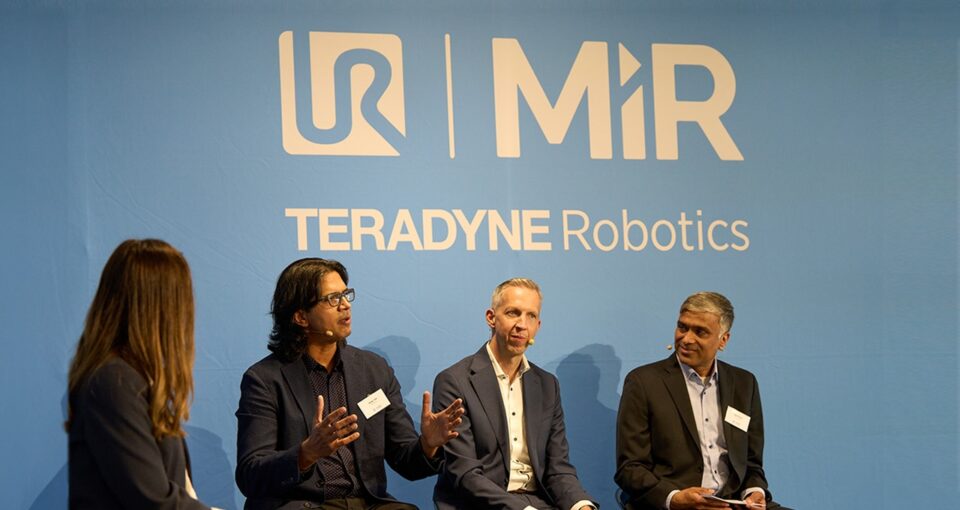
CEO Mark Jagiela has emphasized AI test demand as a multi-year growth driver for Teradyne’s semiconductor segment
The track record establishes credibility but does not guarantee Q4 outperformance. Recent quarters show the Street has become more adept at modeling Teradyne’s AI test exposure, as evidenced by the narrowing surprise percentages in Q3 2025 (7.6%) and Q4 2024 (4.4%) compared to earlier inflection quarters. The current setup differs because management already guided well above consensus in October, forcing analysts to raise models before the print. That dynamic reduces the probability of a large EPS surprise but raises the importance of whether reported results land at the high end of the $1.20 to $1.46 range and whether forward guidance preserves the elevated run-rate.
Post-Earnings Price Movement History
| Date | Result | EPS vs Est. | Next Day Move | Price Change |
|---|---|---|---|---|
| Q3 2025 | +7.6% | $0.85 vs $0.79 | +5.1% | $134.33 to $141.12 |
| Q2 2025 | -2.0% | $0.49 vs $0.50 | +1.7% | $90.35 to $91.92 |
| Q1 2025 | +21.0% | $0.75 vs $0.62 | -0.2% | $82.78 to $82.61 |
| Q4 2024 | +4.4% | $0.95 vs $0.91 | -0.1% | $126.70 to $126.56 |
| Q3 2024 | +13.9% | $0.90 vs $0.79 | -4.2% | $134.64 to $128.99 |
Teradyne’s average next-day move of 4.6% masks significant variance driven by forward guidance rather than reported results. The counterintuitive pattern is that beats average only a 0.1% next-day gain while the single miss in Q2 2025 generated a 1.7% rally, reflecting investor focus on what management says about the future rather than backward-looking execution. The Q3 2025 reaction, a 5.1% surge following a 7.6% EPS beat, stands out because management’s Q4 guidance forced a sharp upward reset of Street models, demonstrating the asymmetry when guidance exceeds expectations by a wide margin.
The guidance-driven reaction pattern is explicit in recent quarters. Q1 2025 delivered a 21.0% EPS beat yet shares fell 0.2% the next day because Q2 guidance included language around customer caution and order pushouts. Q4 2024 repeated the pattern with a 4.4% beat offset by a 0.1% decline as Q1 2025 guidance implied a sequential revenue step-down. Q3 2024 saw a 13.9% beat followed by a 4.2% selloff, consistent with the idea that investors discount beats when forward visibility deteriorates. The Q2 2025 miss paradoxically drove a 1.7% rally because management’s tone around second-half visibility improved despite the near-term shortfall.
Expected Move & Implied Volatility
42.3%
68%
38.7%
Options markets price a 5.5% expected move through the earnings event, translating to a range of $237.42 to $265.06 based on the current $251.24 price. That expectation sits 19% above the 4.6% average historical next-day move but 27% below the combined Q3 2025 reaction when the stock moved 5.1% initially and extended gains to roughly 20% over the following sessions. Implied volatility of 42.3% exceeds 30-day historical volatility of 38.7%, consistent with options traders pricing elevated uncertainty around the Q4 result and Q1 2026 guidance.
Expert Predictions & What to Watch
Key Outlook: Guidance Will Drive the Trade
The base case assumes Teradyne prints EPS between $1.33 and $1.40, landing at or modestly above the guided midpoint, with revenue in the $960M to $980M range. That outcome would validate management’s October guidance and demonstrate AI test demand materialized as signaled. The critical variable is Q1 2026 guidance; if management can articulate a credible path to $850M to $900M revenue for the first quarter, the stock likely sustains its premium multiple and extends toward $270. Conversely, if Q1 guidance implies a sharp sequential step-down below $800M or includes language around Q4 pull-ins creating a digestion period, the stock faces a reset toward the $220 consensus price target.
Key Metrics to Watch
The Q1 2026 revenue guide carries the highest weight for the stock’s post-earnings reaction. Management’s ability to articulate a credible path to $850M or above would validate the AI test thesis and support the current valuation premium, while guidance below $800M would force investors to reassess whether Q4 represented sustainable demand or a pull-forward driven by specific project timing. The language management uses matters as much as the numbers; explicit commentary around multi-year AI test demand visibility with customer wins and capacity expansion plans would reinforce the bull case, while hedging language around lumpiness or limited visibility would trigger a reset.
Gross margin performance provides the clearest read on operating leverage and mix. Landing at 58% or above would demonstrate that higher-margin SoC and memory test revenue is scaling as expected, supporting the earnings growth narrative that justifies the 91.7x trailing P/E. Margins below 57% would indicate either mix headwinds from robotics, pricing pressure in semiconductor test, or execution issues that challenge the margin expansion thesis. The segment revenue breakdown matters because it determines mix; SoC and memory test revenue above consensus would support gross margin upside, while robotics weakness or memory test shortfall would create margin pressure.
Searching for the Perfect Broker?
Supplement your charting with a free trading platform that rivals the best out there – multiple charts on one screen for easy monitoring, ProRealTime provides the perfect support for your investing or trading journey.
Discover our top-recommended brokers for trading stocks, forex, cryptos, and beyond. Dive in and test their capabilities with complimentary demo accounts today!
- IG Top-tier regulation – Read our Review
- eToro Wide range of instruments available to trade – Read our Review
YOUR CAPITAL IS AT RISK. 76% OF RETAIL CFD ACCOUNTS LOSE MONEY


