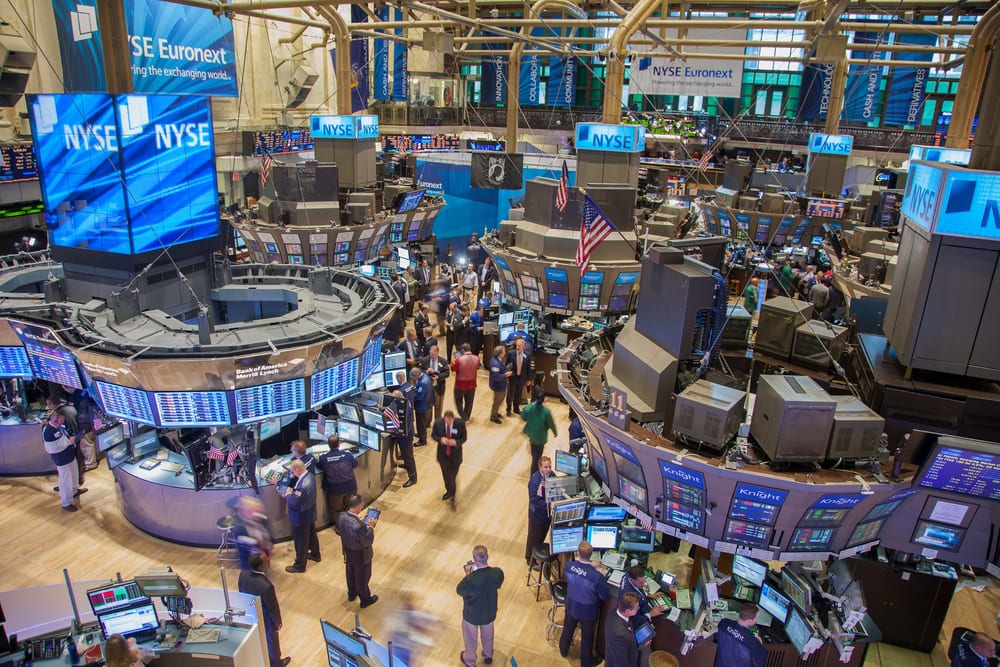

The S&P 500 gained on Monday despite last week’s volatility, which signaled what Northwestern Mutual’s chief investment officer, Brent Schutte, described as a “delicate balance” in the U.S. economy.
Tech-driven indices ended the week under pressure despite a Friday rebound fueled by renewed artificial intelligence spending commitments and reassurances from Nvidia CEO Jensen Huang that AI demand is “incredibly high.”
The S&P 500, heavily influenced by mega-cap growth names, is up 1.74 percent this year, while an equal-weighted version of the index has gained 5.6 percent.
Northwestern Mutual noted a pronounced rotation away from the “Magnificent Seven” and other AI-linked names. Amazon fell 12 percent last week and Alphabet dropped 4.6 percent, pulling the group’s equal-weighted basket down 4.66 percent.
A Goldman Sachs basket of unprofitable tech stocks tied to the AI boom also declined.
In contrast, small- and mid-cap stocks have advanced as investors reposition toward rate-sensitive parts of the market. The S&P 600 is up nearly 9.9 percent year to date, while the S&P MidCap 400 has risen 8.6 percent.
Despite improvements in manufacturing and services activity, Schutte pointed to ongoing weakness in the labor market, noting that Challenger job cuts hit their highest January level since 2009 and job openings fell to their lowest since 2020.
“We continue to urge investors to remain focused on the intermediate to long term rather than chasing immediate gains,” Schutte said, adding that diversification remains critical as market breadth expands beyond its recent tech leaders.
Searching for the Perfect Broker?
Discover our top-recommended brokers for trading or investing in financial markets. Dive in and test their capabilities with complimentary demo accounts today!
- IG Top-tier regulation – Read our Review
- eToro Wide range of instruments available to trade – Read our Review
YOUR CAPITAL IS AT RISK. 76% OF RETAIL CFD ACCOUNTS LOSE MONEY