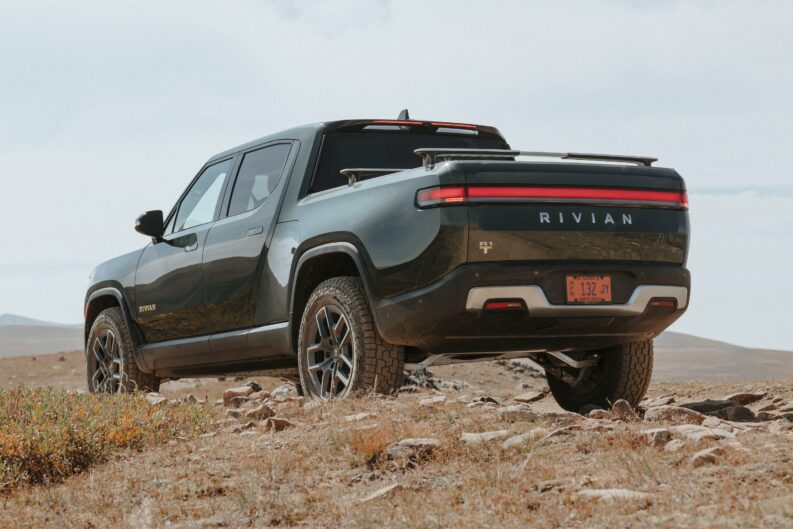

Rivian’s stock (RIVN) is 1.8% lower today at $14.50 ahead of earnings, after a dramatic start to the year that has seen a 25% decline, and $6B in market cap erased.
The quarter provides the read on demand dynamics following the expiration of the $7,500 federal EV tax credit and establishes the baseline for R2 launch execution beginning in the first half of 2026.
Consensus sits at $1.26B revenue and a $0.71 adjusted loss per share, representing a 27.4% revenue decline year-over-year and a 32.7% improvement in losses, creating asymmetric risk tied to whether the company achieved its full-year adjusted EBITDA loss guidance of $1.7B to $1.9B and maintained “modest” gross profit.
The setup reflects a demand pull-forward dynamic that benefited Q3 but created a difficult Q4 comparison. Deliveries in the fourth quarter totaled 9,745 units, down 31% from Q3’s 13,502 units as consumers accelerated purchases ahead of the December 31 incentive expiry.
Full-year 2025 deliveries of 42,247 vehicles met management’s tightened guidance range of 41,500 to 43,500 units but fell 18% year-over-year, underscoring the tension between production capability and market demand at current price points. The quarter will determine whether Rivian can sustain the gross profit trajectory established in Q3 ($24M consolidated gross profit) or if mix and volume pressures force a step back.
$18.34B
N/A
-$0.71
$1.26B
The stock has retreated 33% from its December 2025 peak following the Autonomy and AI Day presentation, which drove an 80% rally on optimism around proprietary autonomous driving technology and in-house silicon development. Current valuation reflects skepticism that AI-driven upside can offset near-term cash burn and profitability challenges, with the company posting a $2.75B loss through the first nine months of 2025 despite a $416M year-over-year improvement in consolidated gross profit. The result will either validate the path to profitability or reinforce concerns that unit economics remain structurally challenged at sub-50,000 annual production volumes.
Consensus Estimates
| Metric | Consensus Est. | Range | Prior Guidance | YoY Change |
|---|---|---|---|---|
| EPS (Adjusted) | -$0.71 | -$0.87 to -$0.70 | Not provided quarterly | +32.7% |
| Revenue | $1.26B | $1.33B to $1.93B | Not provided quarterly | -27.4% |
| Deliveries | 9,745 | N/A | 41,500 to 43,500 (FY) | -31% QoQ |
Analysts Covering: 9 (EPS) / 21 (Revenue)
Estimate Revisions (30d): 2 up / 0 down
The consensus bar sits well below Q3’s $1.56B revenue, reflecting the 31% sequential decline in deliveries already reported at 9,745 units. Benchmark analyst Mickey Legg expects slightly better results with Q4 revenue of $1.27B and a loss per share of $0.61, citing stable execution against a difficult comparison. The estimate range for revenue spans $1.33B to $1.93B, an unusually wide dispersion that reflects uncertainty around software and services contribution, regulatory credit income, and average selling price dynamics. Estimate revisions over the past 30 days have been minimal, with two upward EPS revisions and no downward moves, suggesting analysts have largely priced in the demand headwind from the tax credit expiry.
The more consequential metric is whether Rivian achieved its full-year adjusted EBITDA loss guidance of $1.7B to $1.9B (midpoint $1.8B), which would require Q4 adjusted EBITDA loss of approximately $450M to $650M depending on where the company lands within the range. Through Q3, Rivian had posted cumulative adjusted EBITDA loss of approximately $1.5B, leaving limited room for variance. Capital expenditure adherence to the $1.6B to $1.7B guidance (midpoint $1.65B) will also be scrutinized, as any overrun would pressure the company’s $7B cash position and accelerate the timeline for accessing the Volkswagen joint venture capital or Department of Energy loan facilities.
Management Guidance and Commentary
“We remain committed to achieving modest gross profit for the full year 2025 and adjusted EBITDA loss of $1.7 billion to $1.9 billion, with capital expenditures of $1.6 billion to $1.7 billion.”
Management’s Q3 guidance maintained the full-year adjusted EBITDA loss range of $1.7B to $1.9B despite posting a $24M consolidated gross profit in the quarter, signaling confidence in cost discipline but acknowledging limited margin for execution error. The “modest” gross profit commitment for the full year implies Q4 must avoid a material step back from Q3’s 2% gross margin, a challenging threshold given the 31% sequential decline in deliveries and the potential for unfavorable mix if lower-priced R1T configurations dominated the quarter. CEO RJ Scaringe’s compensation package includes bonuses tied to achieving profitability, aligning management incentives with the gross profit milestone.
“The quarter benefited from demand pull-forward ahead of the federal tax incentive expiry, with deliveries supported by customers accelerating purchases before December 31.”
This Q3 commentary explicitly framed the Q4 setup, acknowledging that strong Q3 deliveries of 13,502 units borrowed from Q4 demand. The implication is that Q4’s 9,745 deliveries represent a normalized run rate in the absence of incentives, a critical data point for modeling 2026 demand before the R2 launch. Management has not provided 2026 delivery guidance, leaving the Street to extrapolate from Q4’s post-incentive demand trajectory. The gap between consensus Q4 revenue of $1.26B and Q3’s $1.56B suggests analysts expect software and services revenue to partially offset the automotive revenue decline, consistent with Rivian’s emphasis on this higher-margin revenue stream.

The guidance gap is less about a specific consensus-versus-guidance delta and more about whether Rivian can demonstrate that the path to profitability remains intact despite a 31% sequential volume decline. If Q4 gross profit turns negative or adjusted EBITDA loss exceeds the high end of the $1.7B to $1.9B range, the narrative shifts from “modest progress toward profitability” to “profitability contingent on R2 volume ramp,” a materially different risk profile.
Analyst Price Targets & Ratings
Wall Street sentiment remains cautiously optimistic but divided, with 45% of analysts rating shares a Hold and 40% maintaining Buy or Strong Buy ratings. The consensus target of $16.96 implies 14.9% upside from current levels, though this reflects a wide range of outcomes based on R2 execution assumptions and profitability timeline estimates.
Sector & Peer Comparison
| Company | Ticker | Market Cap | P/E | Profit Margin | Gross Margin |
|---|---|---|---|---|---|
|
Rivian Automotive
⭐ Focus |
RIVN | $18.34B | N/A | -61.34% | 2.0% |
|
Tesla Inc
|
TSLA | $1.2T | 98.5 | 13.1% | 17.0% |
|
Lucid Group
|
LCID | $8.2B | N/A | -152.3% | -89.4% |
|
Ford Motor
|
F | $42.1B | 6.2 | 3.8% | 8.5% |
|
General Motors
|
GM | $58.3B | 5.1 | 6.2% | 11.2% |
Rivian’s $18.34B market capitalization positions it between Lucid Group at $8.2B and legacy automakers Ford and General Motors, despite producing fewer than 50,000 vehicles annually compared to Ford’s 4.4 million and GM’s 6.2 million. The valuation premium reflects investor willingness to pay for growth optionality tied to the R2 launch and autonomous driving potential, but the premium has compressed 33% from December 2025 highs as skepticism around near-term profitability has reasserted itself. Rivian’s 2% gross margin in Q3 2025 represents a material improvement from prior quarters but remains structurally disadvantaged versus Tesla’s 17% and even Ford’s 8.5%, highlighting the fixed-cost absorption challenge at current production volumes.

The comparison to Lucid is particularly instructive. Lucid’s negative 89.4% gross margin and $8.2B market cap reflect a market that has largely written off the company’s ability to achieve profitability at scale, while Rivian’s positive gross margin and $18.34B valuation signal conditional optimism that the R2 can drive a step-change in unit economics. The gap between Rivian’s 2% gross margin and Tesla’s 17% represents the profitability bridge the company must cross, a journey that depends on R2 volumes reaching 100,000-plus units annually to drive fixed-cost leverage. Legacy automakers Ford and GM trade at single-digit P/E multiples and generate positive free cash flow, underscoring the market’s willingness to assign a growth multiple to Rivian despite ongoing losses, provided the path to profitability remains credible.
Earnings Track Record
| Quarter | EPS Actual | EPS Est. | Result | Surprise % |
|---|---|---|---|---|
| Q3 2025 | -$0.65 | -$0.72 | Beat | +12.2% |
| Q2 2025 | -$0.97 | -$0.66 | Miss | -47.0% |
| Q1 2025 | -$0.48 | -$1.17 | Beat | +59.0% |
| Q4 2024 | -$0.70 | -$0.77 | Beat | +9.7% |
| Q3 2024 | -$0.98 | -$0.92 | Miss | -6.5% |
| Q2 2024 | -$1.13 | -$1.21 | Beat | +6.6% |
| Q1 2024 | -$1.24 | -$1.17 | Miss | -6.0% |
| Q4 2023 | -$1.36 | -$1.32 | Miss | -3.0% |
Rivian has beaten adjusted EPS estimates in 14 of the last 20 quarters, a 70% beat rate with an average surprise of 12.4%. However, the pattern reveals that beats have not consistently translated into positive stock reactions, particularly when guidance disappoints or when the beat is driven by cost cuts rather than revenue strength. Q2 2025’s 47% miss stands as the most significant recent deviation, driven by higher costs tied to rare earth metal supply disruption and reduced regulatory credit income. The miss triggered a 4.5% after-hours decline and forced a widening of the full-year adjusted EBITDA loss outlook to $2.0B to $2.25B from prior guidance.
The more instructive pattern is the relationship between beats and forward guidance. Q4 2024 delivered a sizable beat on both EPS and revenue, yet the stock initially rose 7% after-hours before reversing as investors digested the lower FY2025 delivery guidance of 46,000 to 51,000 units. Similarly, Q1 2025’s 59% EPS beat was offset by a cut to the delivery outlook to 40,000 to 46,000 units and a $1.8B to $1.9B capex increase tied to tariff and trade policy uncertainty. The track record suggests that Rivian’s stock reacts more to the forward framework (deliveries, EBITDA loss, capex) than to the magnitude of the quarterly EPS surprise, consistent with a growth stock where the path to profitability matters more than the current quarter’s loss.
Post-Earnings Price Movement History
| Date | Result | EPS vs Est. | Next Day Move | Price Change |
|---|---|---|---|---|
| Q3 2025 | +12.2% | -$0.65 vs -$0.72 | -4.2% | $15.25 to $14.61 |
| Q2 2025 | -47.0% | -$0.97 vs -$0.66 | -1.0% | $13.60 to $13.47 |
| Q1 2025 | +59.0% | -$0.48 vs -$1.17 | +7.0% | $12.41 to $13.28 |
| Q4 2024 | +9.7% | -$0.70 vs -$0.77 | -2.4% | $13.58 to $13.25 |
| Q3 2024 | -6.5% | -$0.98 vs -$0.92 | -10.0% | $11.60 to $10.44 |
Rivian’s post-earnings price reactions have averaged a 1.9% decline, with beats generating a near-flat 0.1% average move and misses driving a 5.5% average decline. The pattern reveals that beats alone do not guarantee positive reactions, as evidenced by Q3 2025’s 12.2% EPS beat resulting in a 4.2% next-day decline and Q4 2024’s 9.7% beat leading to a 2.4% drop. Both instances followed a similar script: the quarterly result beat estimates, but forward guidance either disappointed or failed to exceed elevated expectations, triggering profit-taking.

The most instructive data point is Q1 2025, where a 59% EPS beat drove a 7.0% next-day gain despite management cutting the full-year delivery outlook. The positive reaction reflected relief that the company achieved gross profit and beat by a wide margin, temporarily overshadowing the guidance cut. Conversely, Q3 2024’s 6.5% miss triggered a 10.0% decline, the largest negative reaction in the recent history, consistent with the pattern that misses are punished more severely than beats are rewarded. The average move on beats of just 0.1% suggests the market prices in execution and reacts primarily to changes in the forward framework rather than the magnitude of the quarterly surprise.
Expected Move & Implied Volatility
85%
78%
72%
Options traders are pricing an 11.88% move in either direction, implying a range of $13.01 to $16.51 from the current $14.76 price. This expected move sits well above the historical average post-earnings move of 1.9%, signaling that the options market anticipates higher-than-normal volatility tied to the combination of Q4 results and potential 2026 guidance. Implied volatility of approximately 85% sits above the 30-day historical volatility of 72%, consistent with event risk premium ahead of earnings. The elevated IV percentile suggests options are pricing in meaningful uncertainty around key metrics, particularly whether Rivian can provide credible 2026 delivery guidance and maintain the profitability trajectory.
The 11.88% expected move translates to approximately $1.75 in either direction, a range that would be triggered by either a material beat on gross profit and encouraging R2 commentary (upside scenario) or a miss on adjusted EBITDA loss guidance and weak 2026 delivery outlook (downside scenario). The fact that options are pricing a move six times larger than the historical average reflects the binary nature of the setup: either Rivian validates the path to profitability and R2 ramp, or it reinforces concerns that unit economics remain challenged and the R2 launch faces demand or execution risk.
Expert Predictions & What to Watch
Key Outlook: Cautiously Neutral
The neutral stance reflects the tension between improving operational execution (three consecutive quarters of gross profit through Q3) and deteriorating demand dynamics (31% sequential decline in Q4 deliveries). Rivian has demonstrated the ability to beat lowered expectations, posting a 70% beat rate over the last 20 quarters, but the stock’s 0.1% average move on beats signals that execution alone does not drive re-rating. The catalyst for a sustained move higher requires management to articulate a 2026 delivery outlook that supports the R2 ramp narrative and a timeline for achieving positive adjusted EBITDA, likely tied to R2 volumes exceeding 30,000 units in the second half of 2026.
Key Metrics to Watch
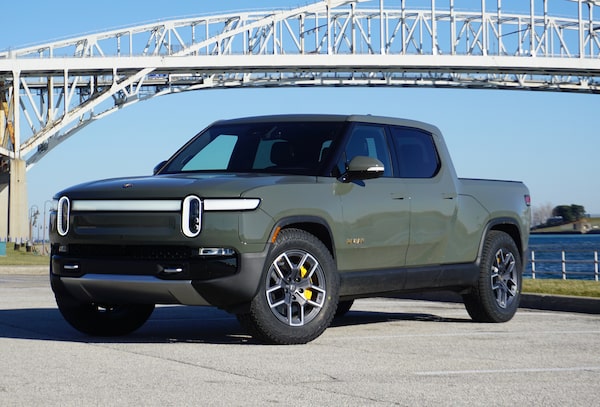
The quarter will be defined by whether Rivian can demonstrate that the profitability trajectory established through Q3 2025 remains intact despite a 31% sequential decline in deliveries. Q4 consolidated gross profit is the single most important metric, as a return to negative gross profit would undermine the narrative that the company has crossed the threshold to sustainable unit economics. The full-year adjusted EBITDA loss must land within the $1.7B to $1.9B guidance range to validate management’s credibility on financial targets, particularly after the Q2 2025 guidance increase created skepticism about cost control.
The forward-looking metrics carry higher weight for the stock reaction. Management’s 2026 delivery guidance will establish the baseline for R2 ramp expectations, with guidance above 50,000 units signaling confidence in demand and production execution. The R2 production timeline is equally critical, as any delay beyond Q2 2026 would compress the window for achieving material volumes in 2026 and push the profitability inflection point into 2027. Software and services revenue growth provides a secondary indicator of whether Rivian can build a higher-margin revenue stream that supports consolidated gross margin expansion as the business scales.
Searching for the Perfect Broker?
Supplement your charting with a free trading platform that rivals the best out there – multiple charts on one screen for easy monitoring, ProRealTime provides the perfect support for your investing or trading journey.
Discover our top-recommended brokers for trading stocks, forex, cryptos, and beyond. Dive in and test their capabilities with complimentary demo accounts today!
- IG Top-tier regulation – Read our Review
- eToro Wide range of instruments available to trade – Read our Review
YOUR CAPITAL IS AT RISK. 76% OF RETAIL CFD ACCOUNTS LOSE MONEY