





Forterra (LON: FORT), the UK maker of clay and concrete building products, cut its full-year profit guidance in a trading update at 7am today. The board now expects adjusted EBITDA, meaning profit before interest, tax and one-offs, of about £50m, against company-compiled consensus of £54.8m.
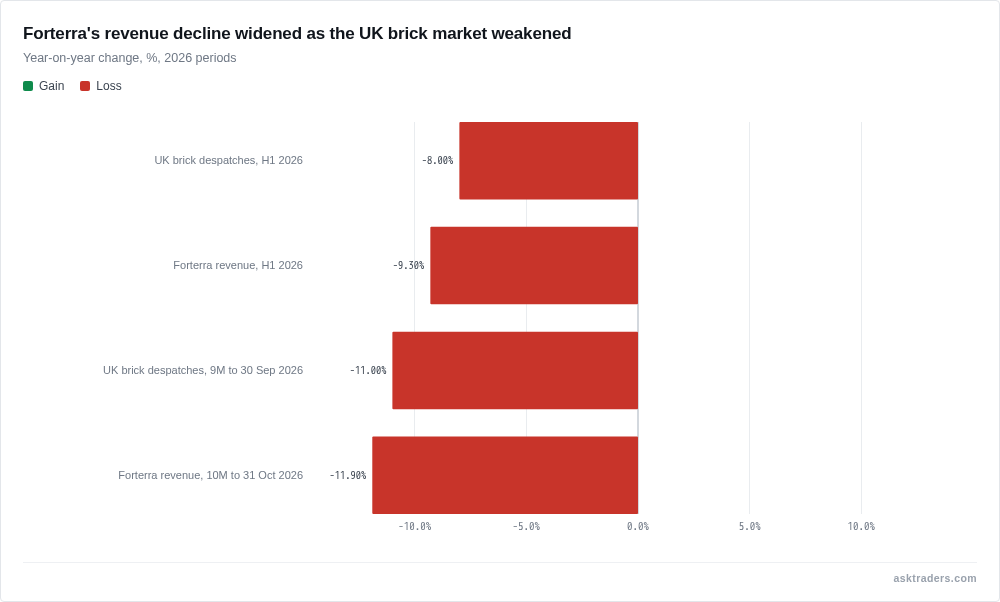
The update covers the ten months to the 31st of October. Revenue was £282.7m, down 11.9% like-for-like, meaning on a comparable basis, after a 9.3% fall in the first half. Forterra said it held its brick market share and that underlying selling prices were in line with its expectations, which points to a weak market rather than lost share.
UK brick despatches, the bricks shipped out of factories, were 11% below the prior year across the industry in the nine months to the 30th of September, worse than the 8% fall in the first half. Demand for repair, maintenance and improvement work, particularly home extensions, remains subdued and broadly in line with new-build housing.
Forterra is cutting production to match demand, which limits stock build and exposure to unhedged gas. The cost is lower fixed-cost absorption, the spreading of factory costs over output, which together with lower volumes drives the new guidance. On our arithmetic from the company’s figures, £50m is about £4.8m, or 8.8%, below consensus. Leverage, net debt relative to EBITDA, is about 1.9x.
There are offsets. Forterra expects about £12m from the sale of two surplus land assets by year end, subject to completion, and its £20m share buyback is due to finish in December. By the 31st of October it had repurchased 12,049,421 shares at a cost of £17.7m.
Inflationary price increases are announced from January 2027, but the company said profitability stays constrained by its fixed cost base without a meaningful volume recovery. It called the Government’s Your First Home scheme welcome, but with its introduction delayed to April 2027 it expects near-term conditions to stay challenging, citing affordability and consumer confidence.
The board remains confident in the medium term, pointing to recent capacity investment, a resilient balance sheet and committed facilities to 2030.