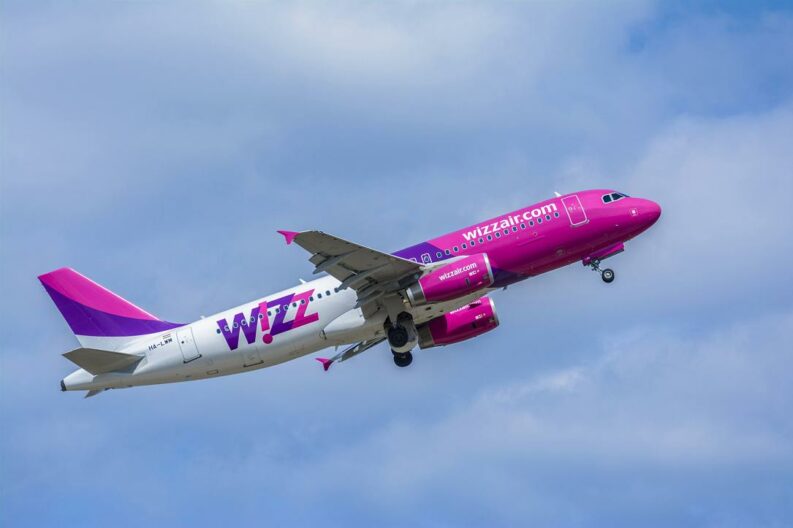

Wizz Air Holdings Plc (LON:WIZZ) is navigating turbulent skies, with its stock under pressure amid ongoing challenges related to Pratt & Whitney engine groundings. Recent developments, including a cautious assessment from Morgan Stanley, underscore the near-term profitability concerns weighing on the airline.
The share price has reflected these difficulties, with a year-to-date decline of over 20%. This performance positions Wizz Air as a laggard among its European peers, as the market grapples with the implications of prolonged operational disruptions.
Morgan Stanley initiated coverage with an ‘Equal Weight’ rating and a 1,080 GBp price target, highlighting the significant impact of the engine issues on the airline’s financial outlook.
Engine Groundings at the Core
The core challenge stems from defects in Pratt & Whitney’s geared turbofan (GTF) engines, which have led to the grounding of a substantial portion of Wizz Air’s Airbus A320neo-family aircraft. While the number of grounded planes has decreased from a peak of nearly 60, approximately 38 aircraft remain out of service as of October 2025. The airline anticipates resolving these groundings by the end of 2027, but this timeline hinges on improvements in Pratt & Whitney’s supply chain, introducing an element of uncertainty.
The financial impact of these groundings is considerable. For the fiscal year ending March 31, 2025, Wizz Air reported a 61.7% decline in operating profit, falling to €167.5 million. This figure fell short of analyst expectations and triggered a 24% drop in the share price following the announcement. The capacity constraints resulting from the grounded aircraft significantly hampered the airline’s ability to capitalize on travel demand.
In response to these challenges, Wizz Air reached a compensation agreement with Pratt & Whitney in January 2025. The deal covers direct costs associated with the groundings and includes operational support through the end of 2026. However, the airline still expects around 40 aircraft to remain grounded through fiscal year 2026, indicating that operational disruptions will persist.
Strategic Adjustments and Outlook
Wizz Air has implemented strategic adjustments to mitigate the impact of the groundings. These measures include extending leases on older aircraft and adjusting flight operations to reduce engine strain. The airline is also planning to take delivery of 50 new Airbus A321neo aircraft in 2025-26, aiming to enhance fuel efficiency and support sustainability goals. Furthermore, Wizz Air exited the Abu Dhabi market in September 2025 to refocus on its core European operations, a move designed to provide some financial relief.
Despite these efforts, the prolonged engine issues and associated operational disruptions have created a cautious outlook among both investors and analysts. The market is closely monitoring Wizz Air’s progress in resolving these challenges, with the combination of grounded aircraft, financial underperformance, and strategic shifts continuing to influence the stock’s trajectory. The fact that a 2027 end to engine disruption is not guaranteed adds further pressure.
Bull Case:
- Reached a compensation agreement with Pratt & Whitney to cover direct costs and provide operational support through 2026.
- Taking delivery of 50 new, fuel-efficient Airbus A321neo aircraft in 2025-26 to modernise the fleet.
- Refocusing on core European operations after exiting the Abu Dhabi market, which could provide financial relief.
- Implementing strategic adjustments, such as extending leases on older aircraft, to mitigate the impact of groundings.
Bear Case:
- Ongoing defects in Pratt & Whitney engines have grounded a significant portion of the fleet, with around 38 aircraft still out of service.
- The stock has underperformed, declining over 20% year-to-date due to operational disruptions.
- Operating profit for the fiscal year ending March 31, 2025, fell by 61.7%, missing analyst expectations.
- The resolution timeline for engine issues extends to the end of 2027 and is not guaranteed, creating prolonged uncertainty.
- Capacity constraints are hampering the airline’s ability to capitalize on travel demand.
Searching for the Perfect Broker?
Supplement your charting with a free trading platform that rivals the best out there – multiple charts on one screen for easy monitoring, ProRealTime provides the perfect support for your investing or trading journey.
Discover our top-recommended brokers for trading stocks, forex, cryptos, and beyond. Dive in and test their capabilities with complimentary demo accounts today!
- IG Top-tier regulation – Read our Review
- eToro Wide range of instruments available to trade – Read our Review
YOUR CAPITAL IS AT RISK. 76% OF RETAIL CFD ACCOUNTS LOSE MONEY