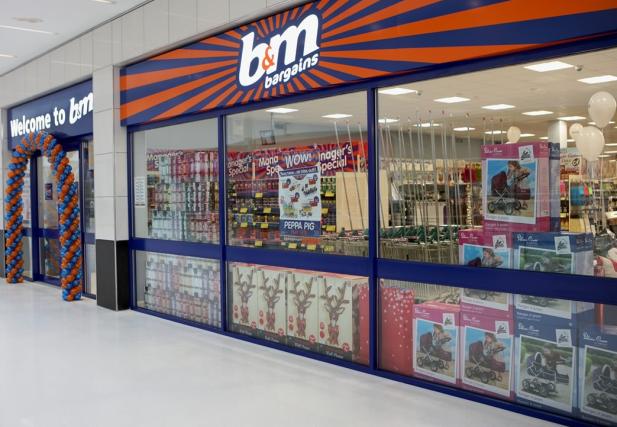



B&M European Value Retail (LON:BME), a stalwart of the UK discount retail scene, finds itself has seen it’s stock come under pressure in recent years, as shifting consumer behaviours have led to a shift in sentiment. The company, known for its wide array of value-priced goods ranging from household essentials to garden supplies, has recently faced challenges that have tested its resilience, even as it pursues growth opportunities and operational efficiencies.
BME shares have fallen more than 25% on the London Stock Exchange since the start of this year, and trade near multi year lows.
B&M operates a network of stores across the UK and France, offering a diverse product range at competitive prices. Its core customer base traditionally consists of budget-conscious shoppers seeking value for money, a segment that theoretically should thrive during periods of economic austerity.
However, the reality has proven more nuanced. The past year has seen B&M grapple with a confluence of factors, including declining like-for-like sales in the UK, rising operational costs, and leadership transitions.
BME Price Targets
As of mid 2025, B&M has received a consensus rating of “Moderate Buy” from analysts, with an average 12-month price target of GBX 428.65. This reflects a cautiously optimistic outlook from the investment community, suggesting that analysts believe the company is well-positioned to overcome its current challenges and deliver positive returns in the future.
Such has been the decline over recent periods that even the bear target on the street offers healthy perceived upside from the current BME share price.
Institutional investors, who hold a significant portion of B&M’s shares, may consider strategic actions to address the company’s market cap decline. These actions could include engaging with management to advocate for specific changes, increasing or decreasing their holdings based on their assessment of the company’s prospects, or even initiating activist campaigns to drive strategic shifts.
The Flip-Side : Bulls Vs Bears
While the prevailing sentiment surrounding B&M appears cautiously optimistic, a contrarian viewpoint might suggest that the challenges facing the company are more deeply rooted than they seem. The decline in like-for-like sales in the UK, despite the theoretical advantage of being a discount retailer during a cost-of-living crisis, could indicate a fundamental shift in consumer preferences or a loss of market share to competitors.
Moreover, the rising operational costs may prove to be more persistent than anticipated, further eroding margins and hindering profitability. The success of the French operations, while positive, may not be sufficient to offset the challenges in the UK market. Furthermore, a reliance on cost-cutting measures can only go so far, and may eventually compromise the quality of products and services, alienating customers in the long run.
Perhaps B&M has simply reached a saturation point in the UK market and needs a radical shift in strategy to reinvigorate growth.
Bull Case
- Successful expansion in France provides a growth catalyst.
- Effective cost management mitigates inflationary pressures.
- Potential domicile relocation enhances capital efficiency.
- Analyst consensus rating of “Moderate Buy” suggests positive outlook.
- Insider buying indicates confidence in long-term prospects.
Bear Case
- Declining like-for-like sales in the UK raise concerns about core market performance.
- Rising operational costs squeeze margins.
- Leadership transition introduces uncertainty.
- Economic downturn and reduced consumer spending pose ongoing challenges.
- Competition from other discount retailers intensifies.
Latest Financials
In the fiscal year ending March 29, 2025, B&M reported a modest 0.6% increase in core annual profit, reaching £620 million, a marginal improvement over the previous year’s £616 million. Total sales rose by 3.7% to £5.6 billion. While these figures indicate overall growth, a closer examination reveals underlying vulnerabilities. Like-for-like sales in the UK, a crucial indicator of retail performance, declined by 3.1%.
This downturn is primarily attributed to reduced demand in fast-moving consumer goods such as food and household products, reflecting a broader trend of cautious consumer spending amidst rising inflation and economic uncertainty.
The challenges faced by B&M are not unique to the company; rather, they mirror the difficulties encountered by the wider discount retail sector. Competitors such as Poundland and Wilko have also experienced similar pressures. One might assume that discount retailers would flourish during a cost-of-living crisis as consumers seek cheaper alternatives.
However, increased operational costs, including higher employer national insurance contributions, business rates, and mandated living wages, have disproportionately impacted low-margin discount chains. Furthermore, economic downturns and job losses among lower-paid workers, who constitute the core customer base for these stores, have further dampened consumer spending. The squeeze on household budgets has forced consumers to prioritize essential spending and cut back on discretionary purchases, impacting sales volumes across various retail categories.
Operational Shifts
Adding to the complexity, B&M announced the immediate departure of CEO Alex Russo in April 2025. The company moved swiftly to appoint Tjeerd Jegen as the new chief executive in May 2025. Jegen brings a wealth of experience in the retail sector, having previously held leadership roles at various international retailers. This change in leadership introduces both uncertainty and opportunity.
While a new CEO can bring fresh perspectives and strategic vision, it also entails a period of adjustment and potential disruption as the company adapts to a new leadership style and direction. The market’s reaction to Jegen’s appointment will be closely watched, as investors assess his ability to navigate the current challenges and steer B&M towards sustained growth.
Despite the recent headwinds, B&M has expressed optimism about its future performance. In April 2025, the company upgraded its annual profit forecast, anticipating adjusted core earnings between £605 million and £625 million. This positive outlook is attributed to strong sales from new store openings and operations in France, as well as effective cost management strategies. The company’s expansion into France has proven to be a successful growth driver, providing a buffer against the challenges in the UK market.
Moreover, B&M’s focus on cost control and operational efficiencies has helped mitigate the impact of rising expenses, allowing the company to maintain profitability despite the challenging economic environment. Following the announcement of the upgraded profit forecast, B&M’s shares experienced a notable increase, reflecting investor confidence in the company’s ability to deliver positive results.
In a strategic move aimed at enhancing operational flexibility and simplifying administrative processes, B&M is considering relocating its parent company’s domicile from Luxembourg to Jersey or Ireland. This potential relocation is driven by the desire to optimize the company’s capital structure and facilitate the return of capital to shareholders. The company intends to retain its London listing if this change is implemented, ensuring continued access to the UK capital markets. The decision to relocate the domicile is a significant one, reflecting B&M’s commitment to long-term value creation and its proactive approach to corporate governance.
In conclusion, B&M European Value Retail is navigating a complex retail environment marked by economic pressures, shifting consumer behaviors, and internal strategic adjustments. The company’s proactive leadership changes, strategic initiatives, and cautious optimism from analysts suggest a concerted effort to adapt and thrive in the evolving market landscape.
However, the challenges are significant, and the company’s future success will depend on its ability to effectively address the underlying issues and capitalize on emerging opportunities.