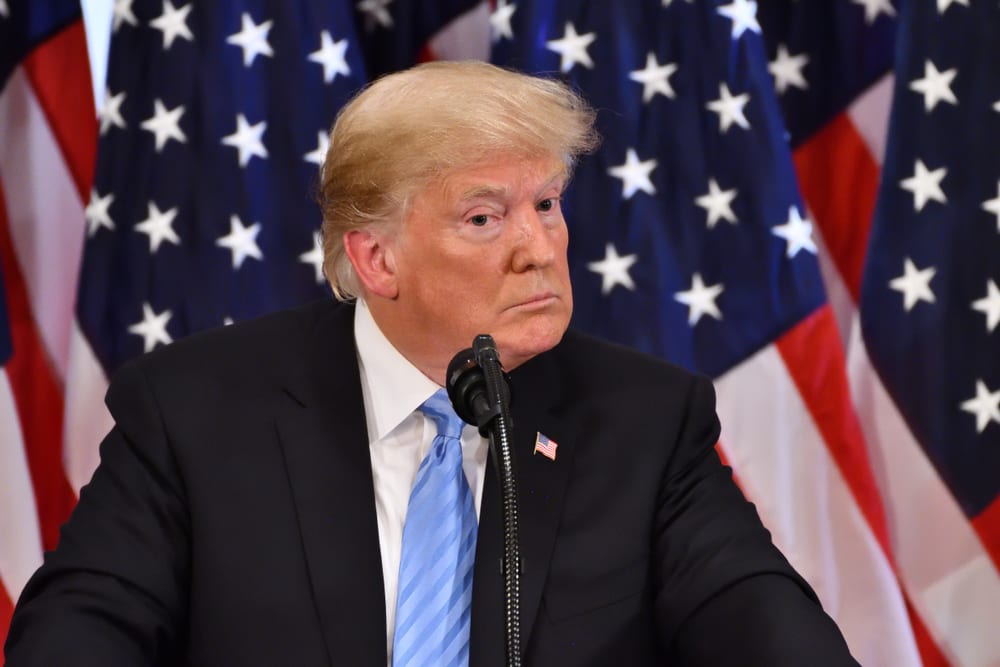

Markets are plunging lower today, as U.S. President Donald Trump signed an executive order last night that is sending ripples through global markets. Modified “reciprocal” tariffs are to come in on dozens of countries, ranging from 10% to 41%, and are set to take effect on August 7th, injecting renewed uncertainty into trade relations.
The move comes after Trump indicated openness to further negotiations, but emphasized it was “too late” for nations to avoid the initial tariff implementation.
Key Highlights:
- Tariffs range from 10% to 41% across countries
- Syria faces the highest tariff at 41%
- All transshipped goods will face an additional 40% tariff
- New tariffs will take effect from August 7th
- Countries with trade agreements with the U.S. face reduced rates
A White House official clarified that the August 7th date was not an extension, but rather aimed at providing U.S. Customs and Border Protection sufficient time for implementation. Trump himself reinforced the firm deadline.
The announcement triggered immediate reactions in global markets. Looking to Asia Pacific, South Korea’s Kospi index shed 3.88%, while Japan’s Nikkei 225 dropped 0.66%. Australia’s S&P/ASX 200 benchmark fell 0.92%.
This reaction has replicated back in the U.S. markets, with all major indices firmly lower. The SPDR S&P 500 ETF Trust (SPY) is down 0.97% from the previous close, the SPDR Dow Jones Industrial Average ETF (DIA) has lost 0.92%., whilst the QQQs are currently down 1.2%.
New Tariff Rates by Country
The executive order targets countries with varying degrees of tariff increases. Syria faces the highest rate at 41%, while Laos and Myanmar will be hit with a 40% duty. Switzerland and South Africa are slated for tariffs of 39% and 30%, respectively.
Interestingly, some Asian nations saw a reduction in previously announced rates. Imports from Thailand will be taxed at 19%, down from 36%, and Malaysia’s rate drops to 19% from 24%. Taiwan will face a 20% tariff, lower than the earlier 32% rate.
A particularly impactful aspect of the directive is the imposition of a 40% tariff on all goods deemed to have been transshipped to avoid applicable duties.
This measure is widely seen as targeting countries like Vietnam, which have been used as conduits for goods circumventing existing tariffs. Countries not explicitly listed in the order will face a default 10% duty.
The order modifies tariffs imposed under a prior executive order from April, and allows for modified rates for trading partners nearing trade and security agreements with the U.S.
The executive order also solidified previously agreed-upon tariff rates with key trading partners, including the European Union, Japan, South Korea, the Philippines, and Indonesia.
Adding to the trade tensions, Trump followed through on plans to raise tariffs on Canadian exports to 35% from 25%, effective Friday, excluding goods covered under the USMCA trade agreement.
China Not Yet Impacted
Notably, tariffs on exports from China, subject to an August 12 deadline following recent trade talks, are not directly impacted by this latest directive. Despite both sides calling the recent U.S.-China trade talks in Stockholm “positive,” no final agreement has been reached.
The European Union anticipates the implementation of a 15% tariff on most of its exports to the U.S. starting August 7. While a political agreement was reached between President Trump and European Commission President Ursula von der Leyen, a formal joint statement outlining the agreement’s details has yet to be finalized.
Searching for the Perfect Broker?
Discover our top-recommended brokers for trading or investing in financial markets. Dive in and test their capabilities with complimentary demo accounts today!
- IG Top-tier regulation – Read our Review
- eToro Wide range of instruments available to trade – Read our Review
YOUR CAPITAL IS AT RISK. 76% OF RETAIL CFD ACCOUNTS LOSE MONEY