




Genedrive (LON: GDR) shares closed 35.9% higher today after the company raised £1.23m at 1.3p a share, a 72.4% premium to yesterday’s close. The AIM-listed Manchester company makes rapid point-of-care genetic tests that guide drug choice.
The shares closed at 1.025p, up from 0.754p, their lowest close in the three months since the 20th of August, when they stood at 1.35p. They opened at 0.875p and touched 1.2p. About 60.6m shares changed hands, against 7.72m yesterday.
The company announced the deal at 7am. It is a direct subscription, meaning investors buy new shares straight from the company with no wider offer, and existing holders were not offered them first. David Nugent, a non-executive director and the largest shareholder, put in £0.1m. Robert English, a substantial shareholder, took £0.5m, and unnamed investors the remaining £0.63m.
Nugent said in the announcement:
Over the past 10 months, the Company has adopted a different approach to financing, reflecting the Board’s commitment to minimising dilution for existing shareholders and delivering long-term shareholder value.
David Nugent, genedrive plc
The timing matters. Results released after the close yesterday showed £1.2m of cash on Monday, down from £3.1m at the end of June, with monthly spending expected to rise to about £0.6m. On the desk’s own arithmetic, that was roughly two months of cover. The new money lifts the total to about £2.4m before fees, or around four months.
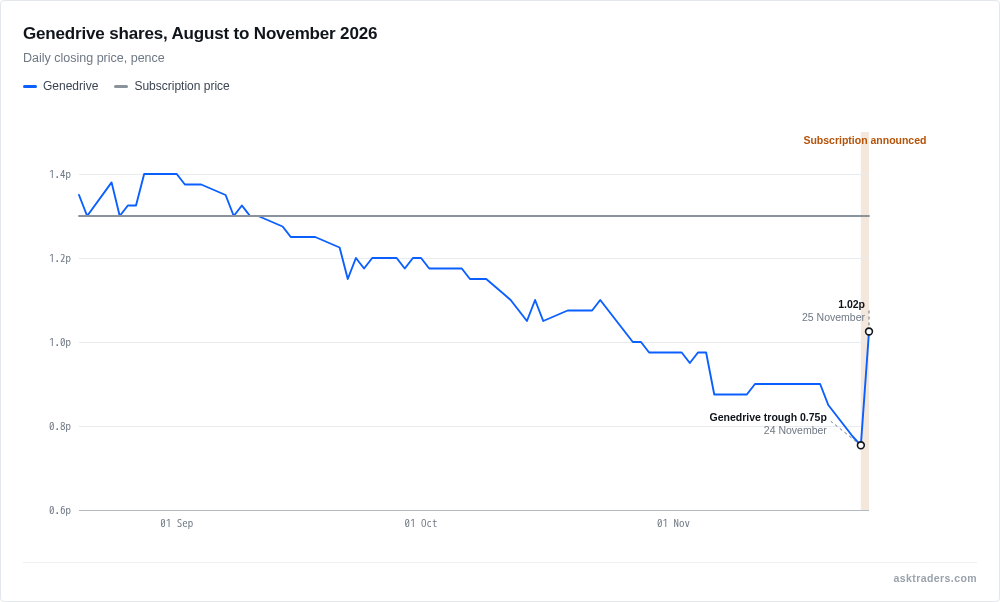
Peel Hunt, Genedrive’s nominated adviser and broker, which does not rate the stock, said the raise addressed the funding need flagged in the results and extended the runway, Proactive Investors reported. The 1.3p issue price is 26.8% above today’s close.
It is also not the first call on shareholders this year. The company raised about £5.75m in March, and the share count has risen from 846m in December to 1,605m, about 90% more shares in under a year.
The bigger catalysts sit beyond the runway. The company points to an NHS England national tender for its hearing test as potentially transformational but uncertain, and a decision from NICE, the NHS cost-effectiveness watchdog, is expected around August 2027. A £0.55m R&D tax refund is also not assured, and the results say securing more working capital is key to receiving it.