
 Español
 Melayu




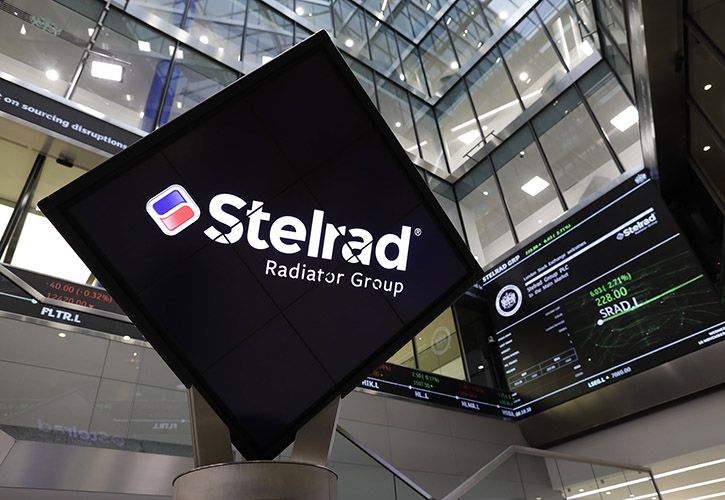
Stelrad Group (LON: SRAD), the Newcastle-based maker of steel panel and designer radiators, cut its 2026 profit guidance earlier today, and its shares fell as much as 19%. It now expects adjusted operating profit, meaning profit before one-offs, interest and tax, of £28m to £29m, against £33.9m consensus, the average analyst forecast, as cited by the company.
The shares touched 114p, their lowest in the past year, from yesterday’s close of 140p. At 15:25 they were at 120p, down 14.3%, on volume of 852,975, 4.6 times yesterday’s full-day total. Daily closes since May had ranged from 132p to 164p.
The trading update, covering the ten months to the 31st of October, came out at 7am, before the market opened. Stelrad said repair, maintenance and improvement spending on homes, and new-build activity, remain subdued. Uncertainty rose further in the second half, particularly in the UK, and competitive pressures are increasing.
Volumes are lower as a result. Stelrad says it is keeping prices competitive and reports a 98% on-time-in-full rate in the UK.
Contribution per radiator, the profit left per unit after variable costs, is still strong but below the £24.32 of the first half. Year-end leverage, net debt before lease liabilities as a multiple of earnings, is expected at about 1.3x, inside the company’s 1.0x to 1.5x target. The pressure is on volumes, not the balance sheet.
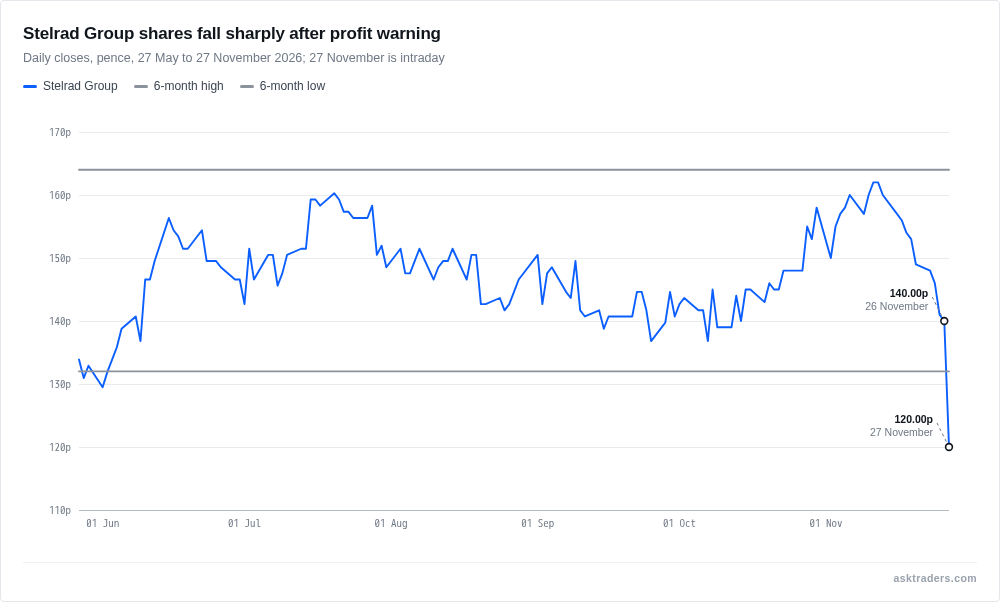
Broker Peel Hunt kept its Buy rating and 190p target, so the note was not a downgrade. It said the guidance is around 15% below its previous expectations and that trading conditions could force further cuts to 2027 forecasts, possibly larger ones. A flat 2027 against revised 2026 expectations would be a good outcome, it added. Before the sell-off the shares traded at nine times its existing 2027 earnings forecasts.
Chief Executive Trevor Harvey struck a firmer tone:
Stelrad continues to deliver exceptional operational performance despite the headwinds presented by a persistently weak volume environment.
Trevor Harvey, Chief Executive, Stelrad Group
The Board said there is no clear catalyst for a recovery in market volumes and expects challenging conditions to persist in 2027. It will give further guidance with the full-year results in March.