




Contracts for difference (CFDs) have had a colourful history, stemming back to the early 1990s in London. The instrument was designed initially as a hedging device for professional traders, but by the turn of the century, it had been introduced to retail forex brokers to complement their existing spread-betting product line. It was not long before CFDs were exported to other international markets. Australia was the first of many countries to welcome this type of forex trading, though the vehicle’s early uses were often for trading stocks and indices. CFDs are unique in that the trader never has to purchase the underlying asset on an exchange. The contract is actually between the broker and the trader. The broker will reward the trader with the ‘difference’, the gain or loss realised on the actual asset during the contracted period, but only if the trader guesses correctly on the direction that asset values traverse. Otherwise, the trader may lose their entire investment or retain a small portion of it, based on the broker’s rules. Gains can be magnified with leverage, but losses can also be magnified. Margin calls can also occur with CFDs, especially when the market moves quickly in the opposite direction from the trader’s choice. CFDs are high risk, as evidenced by the loss rates sustained by customers of these items. Due to regulatory restrictions, most brokers must disclose the level of risk to consumers and post the average loss rate for trades, which have ranged from 70% to 80%.
Regulators across the globe have raised issues regarding CFDs, establishing minimum standards for leverage and blocking bonus programmes associated with the marketing of the device. A few regulators, most notably those in the US and Hong Kong, have outlawed any trading of these instruments by citizens native to their countries, but traders may still have the option of seeking out a reputable CFD broker offshore. While loss rates are high, there are ways to profit when trading CFDs. A reputable and regulated broker is a must-have, but a strategy well-founded in technical indicators and hours of practice and preparation on a demo system are necessary investments. Beginners drawn to CFDs, as if they are the latest online gambling rage, are typically early casualties. The ones that invest the time upfront and follow their strategies to the letter when real money is on the line are the ones who prosper. Trading CFDs is legal in Singapore and has gained great popularity over the past five years or more. The Monetary Authority of Singapore (MAS) does not prohibit CFDs, but it does set minimum limits for leverage and requires that customer deposits are segregated in separate bank accounts at Tier-1 financial institutions. The agency does not require that its citizens or foreign residents trade with one of the nine locally licensed brokers. Traders may trade with offshore brokers, but MAS counsels that the broker must comply with regulatory oversight in its home country. If you are interested in CFDs, then here are four of the best CFD brokers in Singapore.
#1IG
 What We Liked:
- Major international footprint with 20 global offices
- Conforms with several regulatory bodies and is on the London Stock Exchange
- Over 239,000 clients have access to a product offering range of over 17,000 assets
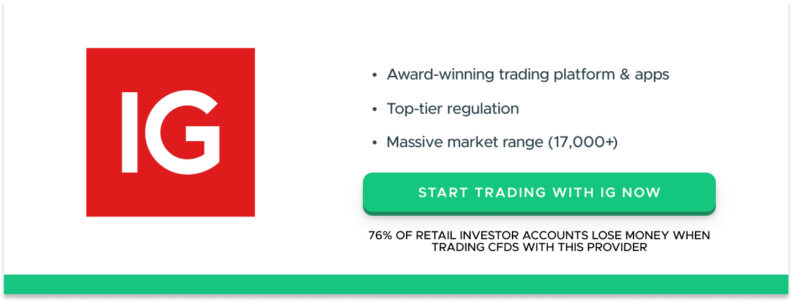
IG Group was founded in 1974 and now has over 239,000 worldwide clients. It claims to be the number one provider of CFDs in the world, primarily due to its extensive asset access in over 17,000 markets. IG Group is also one of only nine forex brokers that have received a licence to operate directly on the ground in Singapore by MAS. The group also complies with the strict standards of the FCA in the UK, and is traded on the London Stock Exchange, where it is a constituent of the FTSE 250 index.
IG Group offers an extensive range of platform options for its clients. MetaTrader 4 is just one popular option, but the firm has also developed several proprietary solutions. Discriminating traders will surely find one to their liking. IG Group is a perennial winner of industry awards for its platforms, customer service and overall operations. In 2020, it received the prestigious award for ‘Best Multi Platform Provider’ by the ADVFN International Financial Awards committee and the ‘Best Finance App’ from the same group. In 2019, Investopedia recognised IG Group by bestowing upon the firm its ‘Best for Forex Trading’ award.
#2FXGT
What We Liked
- Leverage of up to 1:1000
- Spreads as tight as zero pips
- Hassle-free account opening
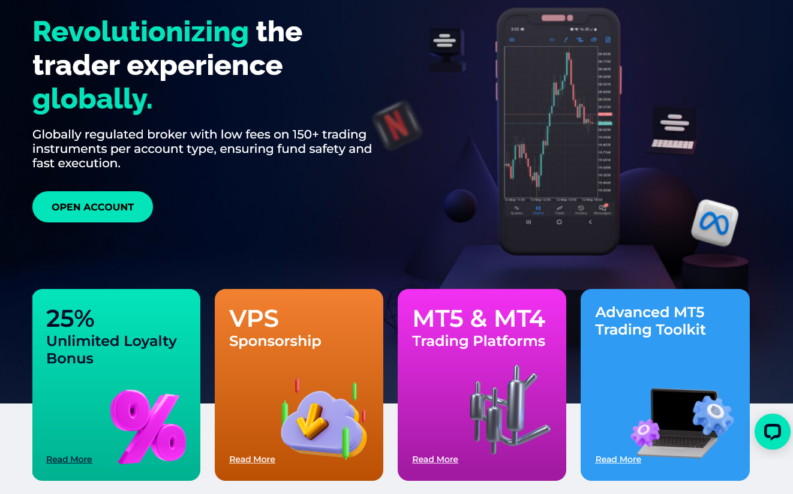
FXGT.com is a fully regulated broker licensed by the Financial Services Authority of Seychelles (FSA), Financial Sector Conduct Authority (FSCA), Vanuatu Financial Services Commission (VFSC), while the Cyprus Securities and Exchange Commission (CySEC) license is reserved for institutional clients only.
#3Plus500 (CFD provider)
What We Liked:
- Regulatory oversight by the FCA and by the London Stock Exchange
- One of the leading authorised CFD brokers in the world
- Over one million customers can choose from over 2,000 tradable assets
- User-friendly proprietary trading platform
Plus500 was founded in 2008, and its headquarters are located in Israel. It has focused primarily on CFDs and has a strong leadership position in both Europe and Asia. In 2018, it completed a public offering to join the London Stock Exchange, and it is also a member of the FTSE 250 index. The company’s primary regulator is the FCA in the UK, but it is also compliant with the regulatory standards of CySEC, ASIC, MAS, ISA, and FSA Seychelles. Plus500 is one of only nine forex brokers that are licensed by MAS.
Plus500 has been called the world’s leading provider of CFDs on forex, stock indices, individual shares, exchange-traded funds (ETFs), cryptocurrencies and commodities. The firm did not choose the very popular MetaTrader platform products but instead developed a proprietary platform, WebTrader. This platform is very user-friendly. Plus500 also offers a mobile app for both Apple and Android phones, and the experience efficiently replicates that found on the WebTrader platform. As with WebTrader, the app has user-friendly functionality and mirrors the same abundance of chart drawing tools and technical indicators.
The firm’s website claims more than 430,000 active customers, with over 82 million positions opened in over 50 countries. The customer service team can also be contacted 24/7 via live chat, WhatsApp and email, a step up from most CFD brokers that only provide support on the five business days of the week. Plus500 has also had its share of award recognitions over the years. In 2020, AtoZ Markets recognised the firm as its ‘Best Broker in Europe’. In 2021, Public Finance International chose Plus500 as its ‘Top Pick CFD Trading Platform’.
This information is NOT relevant to EU residents who are to be serviced by EU subsidiaries of the Plus500 Group, such as Plus500CY Ltd, authorised by CySEC (Reg. 250/14). Different regulatory requirements apply in Europe such as leverage limitations and bonus restrictions.
#4Pepperstone
What We Liked:
- Pepperstone offers traders three top-of-the-line trading platforms
- Strong regulatory compliance with ASIC, FCA, DFSA, SCB, CMA, CySEC, and BaFIN
- Excellent execution functionality with highly competitive spreads
Pepperstone opened its door for business in 2010 in Melbourne, Australia, and from its Asia-Pacific regional base, it has transformed into a world leader in the forex industry. Current trading volumes are in excess of US$12.6bn per day, generated from over 300,000 accounts spread out across the globe. The firm’s extensive network of Tier-1 liquidity providers enables the firm to offer institutional-grade spreads and execution times that rival the quickest in the industry. In 2021, InvestinGoal recognised it as the ‘Best Broker in Australia in 2021’.
Pepperstone offers several trading platform options: MetaTrader 4, MetaTrader 5, TradingView and cTrader. MetaTrader 4 is known as the most popular forex trading platform ever developed, but for those who prefer a more sophisticated design, MetaTrader 5 and cTrader are alternatives worthy of the attention of the most discriminating trader. Pepperstone has a track record of winning various forex industry awards and not just in Australia. In 2021, InvestinGoal named Pepperstone its ‘#1 Best Broker in the World’, ahead of larger and more globally familiar brands.
Why is it important to be extra careful when choosing a CFD broker?
In early 2016, a major global scandal involving binary or digital options was revealed. Untold billions in consumer losses had occurred at the hands of unscrupulous brokers in this space. Casualty rates ran as high as 95% for legitimate brokers, but the bad actors in the brokerage community – who were unregulated, offshore and mostly virtual ghosts – used aggressive cold-calling strategies to persuade clients to deposit funds. They then deliberately stole customer funds and shattered the reputation of the forex industry.
Lawsuits have had little success in recovering any funds for the victims of this heinous crime, but the throngs of binary option enthusiasts quickly crossed over to CFDs as their next resting place. Popularity soared, necessitating regulators to step in and clamp down on CFD providers. However, the bad actors are still out there, plying their ruses in secrecy and stealing the hard-earned capital of unsuspecting victims.
There are legitimate CFD brokers in the forex brokerage community. We have listed four of them above, and there are many more in every jurisdiction around the globe. Be wary of offshore brokers that offer extremely high leverage or large bonuses if you direct wire transfers to their bank accounts in some far-off land. MAS has informed the citizens and residents of Singapore that there is very little that it can do if one of these crooked enterprises defrauds you. Take its advice and only deal with reputable, reliable and regulated CFD brokers.
Concluding Remarks
Trading CFDs can be an exciting adventure, but it is both complex and filled with risk. Recent studies conclude that consumer loss rates are averaging just under 75%, and average losses are roughly US$3,000. Preparation and practice are prerequisites for success, and, of course, you need to have a reliable, ethical and dependable business partner as your CFD broker. All of the brokers listed above fall into the ‘Best’ category for many reasons, and you would be well advised to choose the one that feels right for your CFD trading experience in Singapore.