





Choosing a secure, reliable and efficient broker is one of the best trading decisions you will make. Even better than buying Amazon shares when they first listed at $18 in 1997 or shorting the oil market just before COVID drove crude prices into the ground in 2020. There's nothing more disappointing than making the right calls on the market to find your broker isn't legitimate and that you can't recover your profits or original funds.
Therefore, choosing a regulated broker is the first step towards successful trading, and this review considers a selection of trusted Singapore CFD (Contract for Difference) brokers. Broker choice is down to more than the safety of funds, and all of the below are also ranked highly in terms of the service they offer clients. The good news for traders and investors is that with the Singapore CFD market now ranked number four in the world, many high-quality brokers have opened their doors to Singapore traders. It's just a case of finding the best fit.
#1IG
 What We Liked:
- Excellent all-round service from a multi-asset broker
- Everything you need in one place
- Simple clean design makes it suitable for beginners
- More than 17,000 different CFD markets to trade
- Market-leading trading in-house trading platform, average trade speeds of 0.014 secs
- Research and analysis materials are hard to beat in terms of both quality and quantity
- Asset groups ranging from forex options to US bonds and everything else in between
- Free demo account
- Powerful software tools to take trading to the next level
- Customer support is available 24/5
- Low-cost trading
- The broker has been operating for more than 45 years
- Client funds are ring-fenced
- Regulated by MAS
It’s hard to know where to start when listing the good points about IG. It’s well-regulated, provides an ever-popular platform choice to clients, has thousands of CFD markets on offer and competitive pricing. The scale of the operation is something else. Over the decades it has been operating, the firm has built up numerous additional services, including its TV channel.
It broadcasts market news reports, shares’ The Week Ahead’ reports with clients to prepare for upcoming events, and the broker also offers ‘Trade of the Week’ ideas.

Source: IG
IG Asia Pte Ltd (Co. Reg. No. 200510021K) with registered address, Straits Trading Building, 9 Battery Road #01-02, Singapore 049910, holds a capital markets services licence issued by the Monetary Authority of Singapore for dealing in capital market products that are over-the-counter derivatives contracts and is an exempt financial adviser.
#2FXGT
What We Liked
- Cryptocurrency-friendly
- Leverage of up to 1:1000
- Hassle-free account opening
- Innovative analysis tools
- Spreads as tight as zero pips
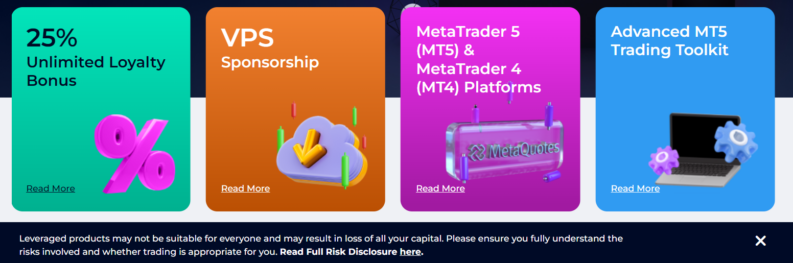
Despite being a relative newcomer, FXGT.com has quickly carved its niche in the broker industry by emphasizing innovation and user-centric features. Established in 2019, the platform has gained rapid global traction, amassing a loyal clientele and earning recognition through prestigious industry awards.
An integral aspect of FXGT.com’s approach is its commitment to user convenience, offering new clients a variety of account types for a tailored experience. By supporting funding in both cryptocurrencies and fiat currencies while keeping trading costs low, the platform ensures accessibility to a wide user base. While the platform’s traditional asset market offerings might not be the most extensive, its pioneering range of crypto asset instruments sets it apart in the industry.
#3Pepperstone
What We Liked:
- Professional-grade trading systems
- Reliable, fast and super low-cost trade execution
- Choose between three top of the range trading dashboards
- Excellent demo account which is free to use and doesn't expire
- No hidden costs
- Very strong in the forex markets
- Supports traders looking to use algorithmic models for hands-free trading
- Occasional bonus offers and promotions such as discounts on fees
- Online learning tools such as webinars are ideal for beginners
- Generous leverage terms

Source: Pepperstone
Pepperstone has built its reputation to become one of the world’s leading forex brokers. The Australia-based firm offered such excellent service that its client base became worldwide, and the number of markets it offered also expanded.
The broker now offers a high-quality CFD trading experience in markets ranging from commodities to stock indices. Additional features that help clients set up in the best way possible include the award-winning customer service and in-depth but jargon-free training webinars and market reports available in video and written format.
Pepperstone Group Limited (pepperstone.com/en-au/) is headquartered at Level 16, Tower One, 727 Collins Street, Melbourne VIC 3008 Australia and regulated by ASIC (Australian Securities & Investments Commission).
Pepperstone Markets Limited (pepperstone.com/en/) has the registered address: Sea Sky Lane, B201 Sandyport, Nassau, New Providence, The Bahamas and is regulated by the SCB (Securities Commission of The Bahamas)
Global clients of Pepperstone are allocated regulatory protection based on where they live.
What are CFDs?
The recent revolution in online trading has democratised the investment industry. It is simple to set up an online brokerage account, and the process is carried out online and takes minutes to complete. Once onboarded to a platform account, holders have several ways of gaining exposure to the financial markets, one of which is CFDs.
Traditional buy-and-hold investing is best explained by a broker taking S$500 from a client account and using it to buy S$500 shares in firm ABC. At CFD platforms, the client doesn’t hold the actual stock; instead, they enter into a legal contract with the broker. The S$500 can be best thought of as a deposit or stake, and if the value of the position in firm ABC goes up to S$550, the broker will credit the client S$50 profit. If ABC falls in value by S$100, then a loss of S$100 is applied, and the client is left holding S$400 rather than S$500.
Fundamental principles relating to market price apply. You can’t buck the market. But because the contract is between the client and the broker, there is some wriggle room which means CFDs have some neat features.
Sell short as well as go long – Clients can agree with the broker that positions will rise if a market falls (not rises) in value.
Leverage – brokers can, at their discretion, allow clients to scale up on positions. Such a strategy does, however, expose traders to an increased possibility of capital loss.
In this example, a S$500 cash deposit can be used to take on positions much greater in size. A position of S$1,000 reflects leverage of 1:2, and in Singapore, leverage in some markets can be as high as 1:20.
When it comes to the topics of ‘selling short and going long’ and ‘leverage’, it is important for the trader to maintain a balanced perspective – a loss funds can be a reality in such a scenario.
Why Do CFD Brokers Apply to be Regulated?
CFD trading relies on your broker’s ability to pay out any profits made on trades, so using a trusted and viable platform is essential. In CFD trading, you don’t have a position in the underlying asset but an agreement with the broker. No matter what additional functionality CFDs offer, there’s no point making a profit if your broker can’t pay investment returns. Traders are advised to maintain an awareness of the risks associated with CFD trading, as losses can indeed be incurred and must be factored into your trading.
Reputable firms, whose business model is based on delivering an attractive service to clients, have realised this and have invested in ways that demonstrate they are a reliable business. One option is applying to be authorised by a regulatory body. The regulatory body overseeing the financial markets in Singapore is the Monetary Authority of Singapore (MAS).
Investors and traders who use a MAS-licensed broker can take a degree of comfort from a range of client protection measures. There is also the option to take complaints to the regulator if the broker doesn’t adequately address your issues
It’s entirely legal for Singapore citizens to use a broker not regulated by MAS and other brokers operating under other regulators’ licences. As long as the regulator is one of the Tier-1 authorities listed, the box is ticked for broker reliability.
- The Financial Conduct Authority (FCA)
- The Australian Securities and Investments Commission (ASIC)
- The US Securities and Exchange Commission (SEC)
- Cyprus Securities and Exchange Commission (CySEC)
What Does Being Regulated Mean?
Brokers invest a lot of time and money gaining a licence and then meeting the ongoing reporting requirements. They also have to demonstrate to the regulator that they have enough cash on hand to make good all their outgoing payments to clients. If a broker opts to be regulated, it is a sign that it is a legitimate business that intends to be operating for years to come. That is crucial in the CFD markets.
The list of brokers includes firms all regulated by Tier-1 authorities, and there’s a bonus feature. Fierce competition in the Singapore CFD broker sector means the firms must compete with each other to gain new business. Some, for example, provide exceptional research and learning resources. Some offer super-low trading costs, while others provide an excellent all-around service. Trying the demo accounts of the Singapore CFD brokers is a risk-free way to test the service each offers and develop some trading skills at the same time.